
An Ordinary Approach To Extraordinary Workplaces
Randy Grieser, CEO of the ACHIEVE Centre, emphasizes in his book "The Ordinary Leader" that everyday leaders of small teams play a crucial role in shaping workplace engagement, productivity, and loyalty by continuously learning and influencing their immediate environments, rather than aspiring only to emulate high-profile executives.
An ordinary approach to extraordinary workplaces
By Patrick Cwiklinski • 6mins read • March 14, 2019
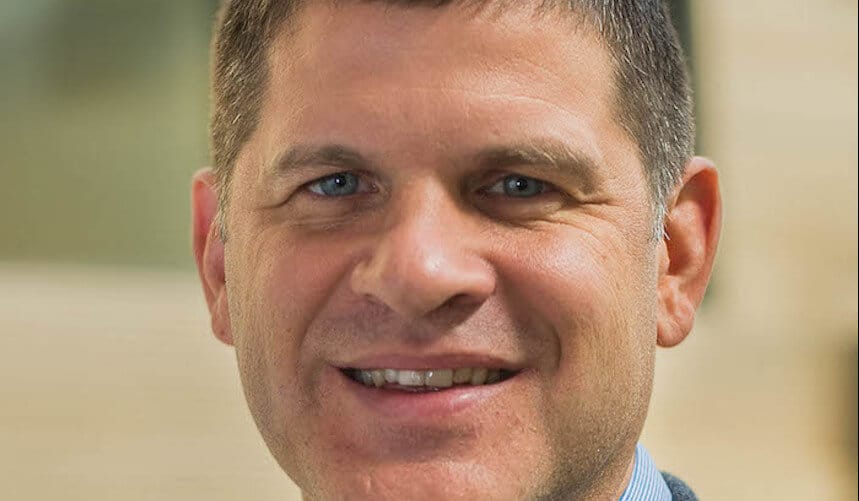
Table of contents

Randy Grieser, CEO of the ACHIEVE Centre for Leadership and Workplace Performance, talks about how ordinary leaders can shape workplace engagement, productivity, and loyalty. Learning the secrets of brilliant executives with billion-dollar ideas is never a bad thing to have in your back pocket, but how many people out there actually run those kinds of organizations?
That question lays the foundation for Randy Gieser’s book The Ordinary Leader, which focuses on leaders of small teams or organizations who are doing great things within their own realm of influence. An accomplished author, speaker, and CEO of the ACHIEVE Centre for Leadership and Workplace Performance, he talks to us about everyday leaders and the workplace that surrounds them.
Could you start off by breaking down this concept of “The Ordinary Leader” and why you think these kind of leaders are important to identify?
Grieser: I wanted to explicitly say that it’s important for us not to feel like we know it all or that we’ve arrived. This idea of not needing to learn anymore after becoming a manager, that’s not true at all. We never get there.
I have a workshop based upon this book and a CEO recently called me and said he heard great things about the training and wanted me to teach his senior leadership. As I was talking to him, I realized that he wasn’t going to attend the workshop. So I asked him “are you planning to come to the workshop too?” and he says “well no, I’ve already been to too many workshops and I have it figured out.”
What I wanted to say was “do you realize the message you’re sending your staff?” If you feel like you’ve arrived, I guarantee what’s going to happen the day of the workshop is people are going to be rolling their eyes because that senior leader did not attend. Part of why I called this concept “The Ordinary Leader” is so we don’t take ourselves too seriously. If you’re not aware that you are still making mistakes and have more to learn, it’s because you’re ignorant and arrogant.
The other thing I wanted to do with the book is write in a way that’s accessible to the majority of leaders I know. Typically when you walk by the business section in a bookstore, you see books about leadership written with large organizations in mind. We see books about Jeff Bezos from Amazon or Howard Schultz from Starbucks and how to be like them.
The reality is that the vast majority of people don’t run large multinational organizations, they work in smaller organizations or in a smaller team within a larger organization. While these people may not be written about in books or quoted in magazines, these direct leaders and supervisors are the most important factor is how an employee views their work experience.

Speaking of that experience, what kind of metrics do you use to measure the strength of a workplace leader? How do you know if an organization is being led properly or improperly and what kind of red flags do you look for?
Grieser: One of the biggest issues, particularly in medium-sized and larger organizations, is that you start to have more than one leader. I have a workforce of 17 employees in my office plus 100 trainers across Canada and the United States — I can’t manage them all, so we have multiple leaders.
One of the things that can happen once you have more than one leader is an incongruence in leadership and in how we lead our people. You get certain departments functioning at very high levels of engagement, productivity, and loyalty. People want to work in that department or division because there’s an innovative, creative spirit everyone wants to be part of. Then you have department B that can’t keep people. Everyone hates working there, they don’t like each other, and the work they’re doing is mediocre.
Nine times of out ten, the reason why there’s a disparity in how those departments are functioning is the direct leader or supervisor. When we interview employees and ask what’s most important to their happiness, engagement, and productivity: their relationship with a direct supervisor is critical.
When you have multiple leaders in an organization, there might be two or three of them doing a really good job of being a caring and relational leader that empowers people and doesn’t micromanage. Then you have a leader in another department who falls into what I call the “old school management style.” A directive style of leadership that doesn’t trust employees. Of course, the result is that department doesn’t function as well.
An indicator for me that you have strong leadership is that you shouldn’t be having issues of toxic conflicts in the workplace. If you have high levels of grievances, high levels of complaints to HR, these are clues that something is wrong with management.

In terms of the physical workplace, how do you think it needs to be set up in order to encourage meaningful employee interactions with leadership?
Grieser: I’m glad you brought that up because it’s important. You have to be thoughtful about your physical workplace and consider if you have natural points of connecting. One of the things that we’ve done intentionally is set up one coffee station and one water cooler with four floors in our office.
I work on the third floor and an employee whose desk is also there recently asked why we don’t have a water cooler on that floor. I told them it’s because I want them to go downstairs so they can run into other people. I want you to connect and rub shoulders with other people you work with because if we have everything in our own little area up here — we’re never going to connect with them. I know that relationships are important not only from a culture perspective, but they can also foster creativity as well.

Could you touch on the cross-section between culture and technology and how the two affect each other?
Grieser: I’ll give you an example of how technology gets in the way of culture. We have rules about emails in our organization and one of my rules is if you write me a long email — I won’t read it. I have literally emailed people back and said I didn’t read this email because it was too long. If it’s important, come talk to me about it.
People over-rely on email and other tools as a source of communicating with other people, both internally and externally. I will often tell people, this should be a phone conversation or for them to come to see me down the hall and talk face-to-face. This is a negative way I’ve seen technology affect culture. It gets in the way of relationships when we defer to writing emails and messages versus having human interactions and conversations.

Some organizations are very financially successful but have poor work cultures. Could you talk about the unique issue organizations like this face as they don’t have any financial incentive to change the way their workplace functions?
Grieser: It’s only a matter of time before you start losing people. One of the biggest stresses for leaders is when there’s high staff turnover. Once people have a certain level of income, they’re motivated by more than money. Eventually, money is not going to be enough.
I like to say that a healthy workplace culture is your competitive advantage. You can’t control the economy or politics, but you can control your culture and whether it’s healthy or not. If you’re in an industry where you’re highly competitive and you’re not paying attention to the health of your culture, someone will inevitably start stealing all your talent.
You also might be doing well financially right now, but you could be doing even better. If you want to supercharge your profits, focus on being a great place to work. It’s really about sustainability. Let’s be honest, companies come and go and the ones that last are the ones that typically have a healthy culture.
You can purchase Randy’s books, The Ordinary Leader and The Culture Question, and visit the ACHIEVE site for more information about leadership workshops and other resources.
Do you think ordinary leaders have the power to impact their organizations in a meaningful way? Join the conversation and leave us a comment below.
Photos: Shutterstock, Shutterstock, Christina Morillo(opens in new tab), Daria Shevtsova(opens in new tab)

Author
Get exclusive insights on workplace trends
utm_content
utm_source
utm_term
utm_medium
Lead ID
- By clicking here, you agree OfficeSpace Software may contact you regarding relevant products & services. You can unsubscribe at any time. Click here for our Privacy Policy(opens in new tab).
Get more out of your space, and connect the people in it
Continue reading

OfficeSpace News
Space utilization metrics: The complete guide for facility managers
By Sean Wiese• 10mins read

Workplace Management
The hidden cost of stitching together point solutions for workplace management
By Nick Mason• 11mins read

Workplace Management
Choosing a workplace management platform: Questions that matter
By Caitlin Frazee• 12mins read
Qualified