
Can Office Design Reflect Corporate Culture?
The article explains how office design can embody and reflect a company's corporate culture by influencing employee morale, communication, and satisfaction, with examples such as open layouts promoting transparency and collaboration, while hierarchical designs indicate structured organization, highlighting the importance of aligning office space with a company's core values and philosophy.
Can Office Design Reflect Corporate Culture?
By Nick Mason • 4mins read • April 18, 2017

Table of contents
An office’s corporate culture is often reflected in its layout. A poorly designed office(opens in new tab) can lead to decreased morale, productivity and a negative office environment, while a good layout can lead to better internal communications and greater employee satisfaction.
Office designs can be used to reflect the values at the core of a company. For example, open spatial configurations and layouts promote a culture of transparency and collaboration, while offices where executives have corner offices may reflect a more hierarchical organization or necessary privacy. When designing your office, it is important to keep in mind the relationship between how a space is used and the overall philosophy or vision of your company.
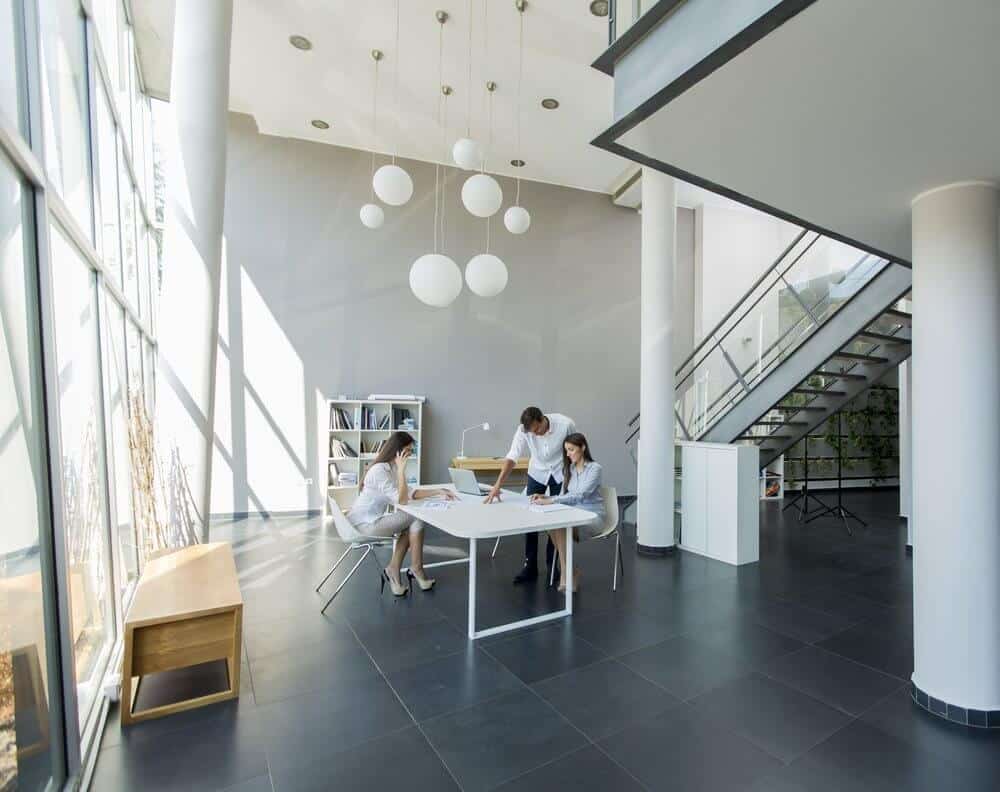
Major tech companies have increasingly been designing their headquarters to reflect their core values. Etsy(opens in new tab), the popular e-commerce marketplace for individuals who create handmade clothing, art, jewelry and more, is a prime example of a business that uses its headquarters to reflect its conscious corporate culture. With values based on community-building, diversity and creativity, the company’s HQ reflects its socially-conscious attitude down to the very materials it used to build the space. The office is built in accordance with the Living Building Challenge(opens in new tab), a green certification with strict rules around energy efficiency and material composition.
The new headquarters are furnished primarily with handmade or “micro-manufactured” furniture(opens in new tab) made by Etsy sellers and other local artisans.
In Etsy’s words, the office was designed to “inspire employees and physically connect them to the marketplace [they] build and nurture every day.” By foregrounding how they hope their space will reflect on and inform office use, Etsy is able to steer the professional values of their workplace and remind their employees of the culture they hope to maintain.
DropBox(opens in new tab), the technology company that allows for file storage and sharing on the go, similarly uses their office to reflect their goals and values. Their 300,000 square-foot head office in San Francisco was recently re-designed to reflect the practicality and functionality (opens in new tab) of their product. Much as the DropBox technology encourages collaboration, the office is filled with shared workspaces for breakout meetings, brainstormings and teamwork. The office is also split into distinct “districts” inspired by a city layout, where departments can create their own vibes and subcultures. This evolving space reflects both DropBox’s simplicity and ease-of-use, as well as its concepts around collaboration, efficiency and the endless possibilities of storage and space.
Etsy and Dropbox are just two of many offices whose physical layouts reflect their corporate mission. More and more companies are realizing that they can foreground their leading values through design.
If you’re redesigning or moving office spaces, here are some things to keep in mind:
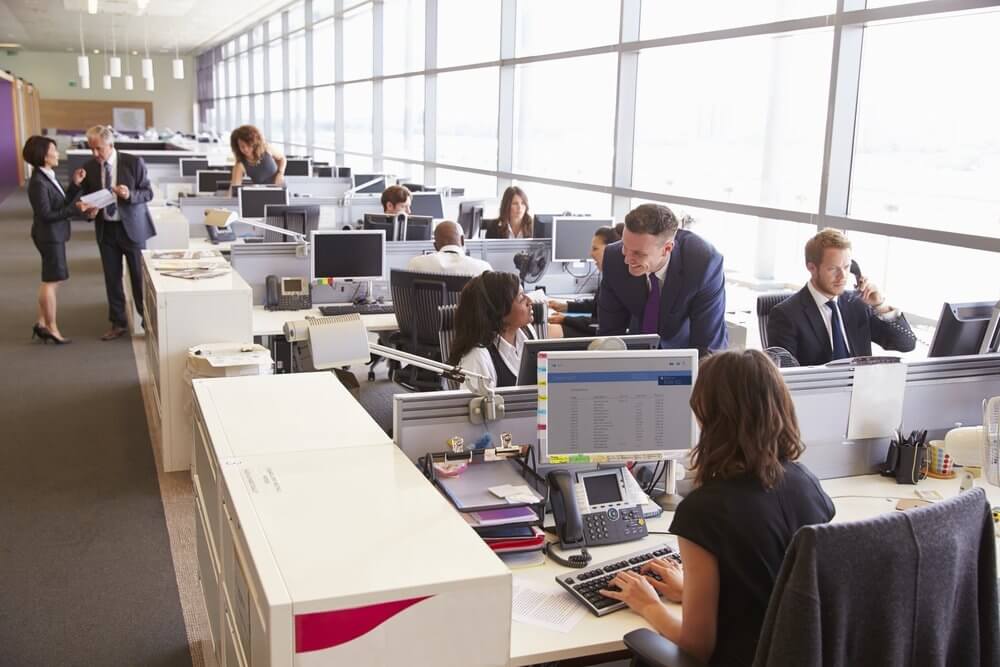
When designing your own office, it’s important to examine how the choices you make send a message to your team. Some things to consider when moving offices or designing a space:
- Would your office benefit from an open floor plan(opens in new tab), or from distinct offices and private wings? For example, in a law practice, it makes sense for partners’ offices to be closed off so that clients can be more comfortable speaking about personal manners. This layout can reflect the professionalism and privacy at the core of a business.
- What level of interaction do your employees have with each other? Do associates need to be communicating often, or training other employees and interns? If employees are often collaborating on projects, open desk plans can encourage teamwork and facilitate easier conversations.
- Does your office need communal workspaces? Do different departments need to meet often for break out sessions? Establishing flex spaces(opens in new tab) and conference rooms where different teams can meet and throw around ideas is a good way to promote brainstorming sessions.
- It’s important to consider the specific values of your company. Is your office based on transparency? Do you have environmental goals, such as receiving your B Corp certification(opens in new tab)? Do you support local businesses and artists? Features like glass walls, plants, green space or a rotation of paintings by local artists can encourage certain values and remind employees and clients of the company’s priorities.
While every company will have slightly different guiding values and goals, their office space should work to make their professional expectations and visions clear. Intentionally designing an office layout to reflect and contribute to office culture(opens in new tab) can help companies share their values with the entire team and lead to a more unified workplace overall.
Photos: Shutterstock / rawpixel , Shutterstock / Goran Bogicevic, Shutterstock / Monkey Business Images

Author
Based in Victoria, BC, Nick is the Director of Product & Client Marketing at OfficeSpace. He's passionate about connecting people with solutions that enable workplaces to thrive in the new world of work.
Get exclusive insights on workplace trends
utm_content
utm_source
utm_term
utm_medium
Lead ID
- By clicking here, you agree OfficeSpace Software may contact you regarding relevant products & services. You can unsubscribe at any time. Click here for our Privacy Policy(opens in new tab).
Get more out of your space, and connect the people in it
Continue reading
The FM Professional
Activity-based workspace design examples and best practices
By Nick Mason• 9mins read
Office Design
The complete office floor plan design guide for hybrid offices in 2026
By Ali Stewart• 12mins read
Office Design
Behind the lens: What an architectural photographer sees inside today’s workplaces
By Rachael Roth• 8mins read