
Corporate Agility and Evolving Workplace Needs
Rick Bartlett, President of Unisource Solutions, discusses how the company transformed its internal corporate strategy and business model—originally focused on executing office relocation projects with bundled services like asset management and warehousing—to adapt to evolving client demands and workplace needs, enabling them to serve a broader range of organizations seeking to revitalize their workplaces.
Corporate Agility and Evolving Workplace Needs
By Patrick Cwiklinski • 7mins read • January 24, 2019

Table of contents
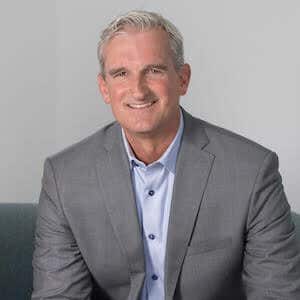
Unisource Solutions President Rick Bartlett talks about how the evolution of corporate needs has impacted his company’s business model.
For a company that has helped so many other organizations with their workplace strategy execution, perhaps the biggest strategic changes they ever made were internal.
Rick Bartlett, President of Unisource Solutions, has been with the company for over 20 years and a key figure in transforming their corporate strategy. He describes a watershed moment where his company was able to adeptly innovate within the organization in order to cater to the changing needs of his clients. Unisource Solutions’ ability to adapt their business model has created new opportunities to work with a broader scope of organizations looking to revitalize their workplaces.
Unisource Solutions has led office relocation projects since 1987. What are some of the biggest changes in client demand from then versus now?
Bartlett: Our company built its business on being able to execute projects really well. We had this vast service infrastructure and we would provide these bundled service programs for our customers. Our programs would consist of asset management, warehousing and the reconfiguration of their existing product, all of the technical and labor resources to help companies with their daily moves, as well as the resources and product sourcing services to provide actual furniture to our customers as well.
We were always executing somebody else’s plan. Once upon a time, a designer or customer would come to us with a floor plan and ask us to specify the furniture for that plan, stick to what they had on paper, and ask for a proposal to specify that product and install it. We would go ahead and take our marching orders and do exactly what they asked us to do.
Today is a much different story. We’re not just executing somebody else’s plan all the time: part of the process is now creating the plan. As companies are now designing spaces differently than they have been for the last two decades, they’re completely transforming the way they work and now they’re asking us for our input.
A number of years ago, we had a near-death experience with a big customer of ours that was looking at completely blowing up the way they were working. We had a great working relationship with this customer. We employed an entire staff that would report to this customer’s campus daily and they were basically an extension of their facilities staff. There was a program manager, designers, project managers, and installation staff, and this team consistently did a great job executing projects day in and day out. The problem was that this company needed to change the way they worked and they didn’t see us as a change agent because of the business we’d done with them in the past. We did a great job executing their plan, but now they needed a new plan and they needed someone to help write it.
That was kind of a watershed moment for us because we weren’t a change agent, but an execution engine. At that time, we weren’t really staffed with people who were interested in grasping the mantle of change management. Long story short, we did what we needed to do to keep that customer by putting new resources in place to meet their new challenges. Today, we’re continuing to help them adapt to new and innovative ways of working, but that event put us on a track to completely redefine who we were as an organization and the type of people that we needed to usher in a “next generation” way of thinking as it related to designing office spaces and executing projects.
We had to go from a production mindset to a creative mindset without actually forsaking that production mindset fully because we still need to do a great job executing projects. Now we get to help plan those projects and identify what they are all about in the first place.

What is the process of working with an organization to execute a successful office relocation? What kind of dialogue needs to take place between you and the client?
Bartlett: If you look at how we used to work, that process was an exercise in efficiency. Our space-planning process used to consist of identifying how many little boxes (cubicles) we could fit into a big box (building).
For the first 15 years that I was in the industry, companies acted like the building was their most important asset. When it came to doing facilities projects, it was all about making the most efficient use of the building and almost ignoring the requirements of the occupant going into it. Somewhere along the way, someone realized that the occupant was a whole lot more valuable to the organization than the building itself. We used to have a building-centric approach to planning and executing projects — it’s a much more people-centric approach today.
Instead of figuring out how many little boxes we can fit into one big box, the discussion is now “what can we do to make this big box or maybe a slightly smaller box a much more effective box?” How do we optimize that space? We’ve gone from a conversation that primarily focuses on efficient use of space to a conversation that tries to identify the optimal use of that space and how we can configure it to create a much more engaging experience for the occupants using it.

Another big part of Unisource Solutions’ business is corporate furniture. What are some of the biggest trends you’re currently seeing in this space? What are organizations looking for in their furniture in terms of functionality?
Bartlett: Sticking with that people-centric approach, organizations are looking to accommodate the individual in as many ways as possible. Individual space has shrunk and while their office space doesn’t need to be very big, it should be as functional as possible and give them as much latitude to make changes within the amount of space they’re working in.
We see a transition to a much more agile environment. Some people use activity-based working while others go as far as to make the space completely free-address. These are approaches that focus more on the individual’s needs versus the overall building performance. At the end of the day, the building ends up performing well because the individuals occupying the space are able to make the absolute most of their time in it.
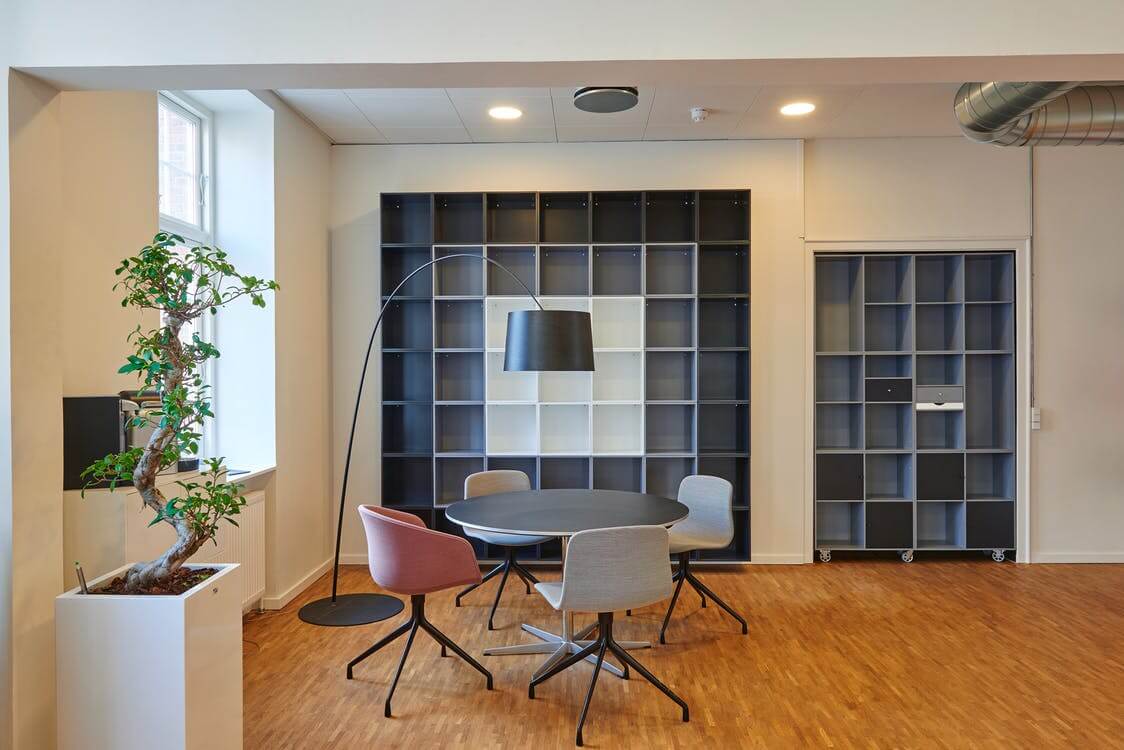
Speaking of agile work environments, what kind of experience have you had with things like hot desking and desk booking? Are there any success stories you can share with us?
Bartlett: We work with a large biotech a company in Southern California that has transitioned from a traditional work model into one that is completely agile. They have a roughly 6,000-person campus and we’ve been part of helping them transform that campus into a place that is completely free-address.
Their campus is big and beautiful, and it looks like a college campus. The buildings have always had ample workspaces for their occupants. A number of years ago, they started to think about how they needed to reduce their real estate footprint on a worldwide basis. They came to the conclusion that they could afford to make their workstations a little bit smaller and make this mobile and hot desking type of workstyle available to their people.
It wasn’t until they identified an opportunity to turn their workspace into more of a physical social network, where people got out of silos and actually collaborated on a routine basis, that they could actually leverage their campus to help grow collective trust in their organization. That’s when they decided to hit the gas on this open and collaborative office environment. What started as a pure exercise in reducing their real estate footprint became a process where they were intentionally forcing people to get out of their siloed comfort zones and into a much more engaging atmosphere. They would build trust within the organization by optimizing communication and innovate faster than their competition as a result.

How has the rise of agile working changed Unisource Solutions’ business model when it comes to providing corporate furniture?
Bartlett: We built our business by planning and installing a sea of workstations — 8 x 8 cubicles as far as the eye can see. For decades, these workstations would constitute the vast majority of what we were providing to the companies we serviced.
There’s a furniture expression known as “ancillary furniture” that describes basically everything leftover from workstations. People still use that term today but it’s a misnomer because the ancillary product is oftentimes more than half of the furniture that goes into a space. It’s all non-workspace-related furniture like lounge seating, conference room furniture, and things of that nature.
As workspaces have shrunk, whether or not a company is going into hot desking or free-address, the individual workstation is oftentimes just a height-adjustable desk. It used to be an 8 x 8 and now it takes up just 25 square feet, and the rest of the office is made up of all these different collaborative settings that consist of enclosed conference rooms, smaller meeting hubs, open area gathering meeting spaces, various lounge settings, and amenity spaces. These are the applications that can really define the character of a space and make that space a great place to work. These are the items that companies can allow some expression to come through. Lounge furnishing, for example, will oftentimes help reflect a company’s brand and culture.
We have an opportunity to be at the table to identify what these items are. We’re looking at how these various “ancillary items” can actually reflect a company’s culture and exemplify or manifest the brand in a much more meaningful way. It’s not just the same go-to products that we’ve worked with for years; it opens the door to a whole host of smaller manufacturers that can meet specific or niche requirements with specialized product applications better than others.
In fact, as more and more of our customers have asked us to buy products that reflect their brand and values, we’ve actually gotten into designing and manufacturing our own bespoke furniture that can really nail the design intent of a space by reflecting our customer’s brand, culture and vision. We’ve created our own furniture design and manufacturing division within Unisource Solutions called Platform.
Find out more about how Unisource Solutions can help your organization with its workplace strategy needs at their website.
How do you think new ways of working have impacted office relocations and corporate furniture? Join the conversation and leave us a comment below.
Photos: Pexels(opens in new tab), Shutterstock, Pexels(opens in new tab), Shutterstock

Author
Get exclusive insights on workplace trends
utm_content
utm_source
utm_term
utm_medium
Lead ID
- By clicking here, you agree OfficeSpace Software may contact you regarding relevant products & services. You can unsubscribe at any time. Click here for our Privacy Policy(opens in new tab).
Get more out of your space, and connect the people in it
Continue reading
Workplace Technology
Room scheduling software: The checklist facility teams actually need
By Sean Wiese• 13mins read

Workplace Experience
What working parents need from employers, according to working parents
By Rachael Roth• 5mins read
Workplace Experience
Leaders of the Built World EP 01: Erin Mulligan Helgren
By Rachael Roth• 4mins read
Qualified
Ellie, AI Agent
EllieAI Agent
Speak now
Hi, I'm Ellie with OfficeSpace. Are you exploring ways to increase corporate agility in your workplace management?
Conversation
Hi, I'm Ellie with OfficeSpace. Are you exploring ways to increase corporate agility in your workplace management?
Message input
Book a Meeting
Message Ellie
By continuing, you agree this conversation may be recorded and used per our Privacy Policy
Ask Ellie