
Facilities Management KPIs: What Facility Managers Should Track
The article discusses the importance of facility managers tracking specific KPIs to gain actionable insights that improve headcount and facility planning, enhance workplace experience, and adapt to the fluid demands of hybrid work environments.
KPI: facility management metrics FMs should track for the hybrid office
By Joe Scaramellino • 7mins read • July 7, 2022

Table of contents
- What does a KPI measure?
- What is KPI in facilities management?
- What are the 5 KPIs for facility management?
- The right KPIs create a better workspace
Creating and tracking a KPI facility management plan has always been one of the most important facility manager (FM) responsibilities(opens in new tab). Good KPIs provide actionable insight into the workplace. This can improve both headcount planning(opens in new tab) and facility planning(opens in new tab), all while enhancing the office and the workplace experience(opens in new tab).
Of course, with hybrid work,(opens in new tab) the office is becoming much more fluid and flexible—requiring much more fluid and flexible performance measurements to keep pace.
In this article, we explore a revised and updated KPI facility management plan to help optimize your organization’s hybrid workplace experience.
What does a KPI measure?
KPI stands for ‘key performance indicator’. Like the name suggests, these are specific measurements that are tracked and analyzed to understand how well an organization is meeting strategic goals.
Note that KPIs are not simple, one-off metrics. For example, average space utilization is a metric that a FM might have on their facility checklist(opens in new tab). But tracking expected space usage versus actual usage, over time, by building or by floor, is an example of a KPI that can help an FM make more informed decisions regarding their real estate portfolio(opens in new tab).
In this sense, KPIs are like ‘metrics plus,’ designed to better understand specific progress in specific, carefully chosen areas. They’re smart, curated benchmarks that offer a better picture of how well an organization is performing. All while pointing to areas of improvement, too.

What is KPI in facilities management?
Most departments in an organization will have their own KPIs to monitor growth and success (or lack thereof). Facility maintenance and management departments are no different. FMs should always be measuring multiple metrics to gain insight into their workplace.
Specifically, FMs need metrics to help them better understand complex issues. Like how employees are using their current space, the average completion time for service requests and work orders, and whether energy consumption is in line with sustainability goals.
At the end of the day, employees are like an FM’s customers. To ensure ‘customer satisfaction,’ FMs need to understand how well the facility is actually meeting employee needs. Whether it’s space planning for a new office, move management(opens in new tab) for moving to a new space, improving space utilization(opens in new tab), or revamping the office to embrace a new work environment type(opens in new tab), the better FMs can track facility operations, the better they’ll serve their customers.
To do this, they need good workplace analytics(opens in new tab) provided by good facility management software. This is often a computerized maintenance management system (CMMS) or, ideally, an integrated workplace management system (IWMS)(opens in new tab).
And to do this in an increasingly complex hybrid workplace(opens in new tab), they also need increasingly complex facility management KPIs that keep pace with any new initiatives in the office.

What are the 5 KPIs for facility management?
There’s no question that as we return to the office(opens in new tab), we’re also returning to a new office—one that is increasingly flexible, human-centric, and hybrid.
To keep up and stay cost-effective, FMs therefore need a revised set of real estate and workplace KPIs.
Note that this process isn’t about throwing out traditional KPIs; instead, it’s about revamping them, to gain more (and better) insight into both the hybrid workplace and the employee experience(opens in new tab).
Specifically, FMs should create a new, smart KPI facility management plan that covers the following five updated KPIs.
1. KPI: new facility management metrics for space utilization
Understanding your space utilization is make-or-break when it comes to facility management, but improving it is not always an easy task. While maximizing space allocation keeps operating costs low, it should never be done at the expense of employee needs.
In the past, with every employee sitting at the same desk and working the same hours, occupancy rates(opens in new tab) were fairly easy to calculate. You just needed to know your square feet and how many people were assigned desks.
But now that more companies are embracing a hybrid work schedule(opens in new tab), FMs need to carefully choose and track the right KPIs to understand how their facilities are actually being used in real time.
To keep up, FMs now need software that will help them track new space utilization KPIs. Like average space utilization on a daily or hourly basis, peak utilization, and occupancy rates by floor.
If the office is using agile working(opens in new tab) or activity-based based working(opens in new tab), where different areas of the office are used for different types of work, it’s also incredibly helpful to understand the utilization for each individual area of the office.
And FMs also need to track new space utilization KPIs to allow for better headcount and facility planning.
This data is best collected by using the right software that pulls information from both employee desk bookings and, ideally, IoT sensors(opens in new tab). When armed with all this data, FMs will be better able to make achievable recommendations to enhance workplace strategy(opens in new tab).
“As an occupancy planner, being able to trust the data I’m working with is crucial. “
Emily Pino-Williams, Senior Occupancy Planner, Cruise Automation
2. KPI: new facility management metrics for meeting rooms
As we all quickly learned during the pandemic, hybrid meetings(opens in new tab) can be challenging at best. Now as workers come back to the office, many companies are reassessing their meeting room design(opens in new tab). This is an attempt to provide the right mix of the right type of collaborative spaces in a new work reality (and ideally avoid having empty meeting rooms(opens in new tab), too).
For example, we’re seeing many new workplace trends(opens in new tab) where companies reimagine the traditional boardroom. They’re coming up with new and exciting ways to create more (and better) collaborative spaces.
But again, this process can be easier said than done when you haven’t established the right new KPIs.
So to ensure they’re providing the right types of meeting spaces to encourage more collaboration in the workplace(opens in new tab), FMs will therefore need new KPIs that track things like the popularity of individual rooms or of different room types.
3. KPI: new facility management metrics for desk usage
Today’s modern office offers a variety of flexible seating (opens in new tab) options. This is often great for employees, who enjoy having more control over where they sit. But it’s not so great if they have to spend time each morning trying to book and/or find their desk. It’s also not great if FMs can’t easily track who is sitting where, when, for how long, and how often.
That’s why FMs today need accurate desk usage metrics. They need to show how well the physical work space is actually serving the people who use it.
Therefore, understanding booking demand, seat popularity, and desk utilization (both daily, hourly, and by desk type) are just some of the modern metrics FMs should track.
They’re also just some of the metrics that are easy to find with OfficeSpace’s in-depth desk booking(opens in new tab) reports.
Before we launched OfficeSpace internally, we didn’t have visibility into who sat where, and no way to track when people moved. We needed more accountability, better data, and accurate reporting to keep up with Shopify’s rapid growth.
Alicia Murrell, Workplace Experience Manager, Shopify
4. KPI: new facility management metrics for workplace requests
One of an FM’s main jobs is to ensure employees have everything they need to do their jobs well. Which is why optimizing workplace requests is always so critical. When requests are met promptly, it can dramatically reduce maintenance costs and company downtime.
So to prioritize requests, FMs need to ensure they are tracking more than just the average response time it takes the maintenance team to fulfill them.
FMs also need to understand where requests are coming from, what type they’re fielding, and if employees feel like they are getting their needs met.
Plus, employees need an intuitive and robust system for submitting facilities requests(opens in new tab), too.
When it comes to requests, FMs and employees alike can really benefit from a tool like Request Manager(opens in new tab). Not only does it make it easy for employees to submit requests. It also provides critical, in-depth insight into maintenance operations.
FMs will also ideally have a facility management maintenance(opens in new tab) plan in place to allow for better preventative maintenance. This is always easier and cheaper than reactive maintenance.
Finally, FMs may also want to consider creating an informal service level agreement (SLA) with their employees to ensure they’re meeting agreed upon targets. Of course, they can only offer this level of service if they’re also tracking dedicated performance metrics in the first place.
As a manager, I knew my team was busy, but I couldn’t quantify how busy they were, or measure their performance over time. Now using Request Manager we’ve set customizable SLAs to track how our Facilities team is performing. We run satisfaction surveys after each request to gauge how happy our employees are with our performance.
Jason Saham, Director of Executive Operations, Malwarebytes
5. KPI: new FM metrics for occupancy costs
Last but definitely not least, it’s obvious that either overestimating or underestimating corporate real estate (opens in new tab) needs is costly. To make the right financial decisions, FMs therefore need new ways to track occupancy costs across their entire real estate portfolio(opens in new tab).
Notice, again, that hybrid employees(opens in new tab) make this a much more complex task than it might have been in the past. Even when they’re assigned to a desk, they’re not using it all the time. In other words, even if they had identical office spaces and layouts, a traditional company could have very different occupancy costs than a hybrid one.
FMs therefore need metrics to measure real occupancy costs. Better still if these metrics are part of a software platform that can also help track leases, normalize least cost, and optimize your space at scale.
I manage all of our leases with OfficeSpace. It’s a very quick way for me to see our annual costs and operating costs at a glance. And I use the real estate reports to quickly view accurate costs for each of Procore’s offices and understand why some locations are more expensive than others.
Scott Moitoza, Senior Director of Real-Estate and Facilities, Procore

The right KPIs create a better workspace
The more things change, the more they stay the same.
FMs have always needed to optimize the three basic elements of space management(opens in new tab): space planning, implementation, and tracking.
And they’ve always needed to do this in a way that is in line with their company’s goals and budget. But while also ensuring employees have the tools they need to do their best work.
How they do this in a hybrid environment has changed dramatically. This requires complex new KPIs and the right software to track them. But why they do this is the same: to create a better workspace for everyone who uses it.
OfficeSpace offers workplace management software that dramatically simplifies KPI facility management. Reach out(opens in new tab) for a free demo.
Photos: courtneyk(opens in new tab), Tempura(opens in new tab), xavierarnau(opens in new tab), Sanja Radin(opens in new tab)

Author
Get exclusive insights on workplace trends
utm_content
utm_source
utm_term
utm_medium
Lead ID
- By clicking here, you agree OfficeSpace Software may contact you regarding relevant products & services. You can unsubscribe at any time. Click here for our Privacy Policy(opens in new tab).
Get more out of your space, and connect the people in it
Continue reading
The FM Professional
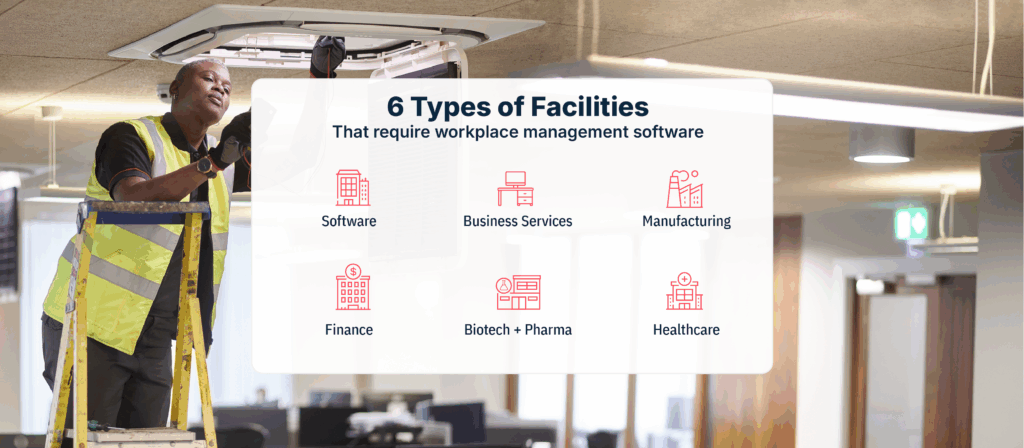
Facility management examples across 6 types of facilities
By Sean Wiese• 9mins read
The FM Professional
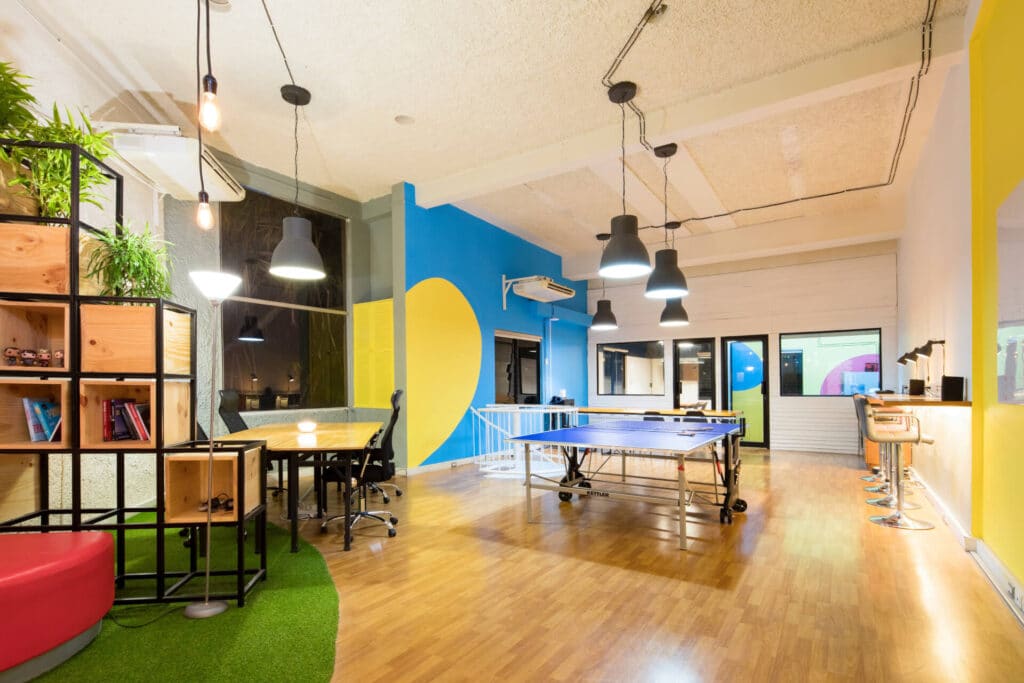
Activity-based workspace design examples and best practices
By Nick Mason• 9mins read

The FM Professional
Will AI replace your job? Not exactly, but it will transform how you work
By Elizabeth Perry• 5mins read
Qualified