
Future of Office: Next Generation Workplace Design
The article explains that by 2026, 69% of organizations have adopted hot desking—where employees use unassigned workstations daily—to optimize office space, enhance desk utilization, and cut real estate expenses, and it provides facilities managers with practical guidance on implementing hot desking models integrated with space management and hybrid work software for effective workplace operations.
What is a hot desk? Everything facilities managers need to know in 2026
By Nick Mason • 11mins read • September 2, 2026
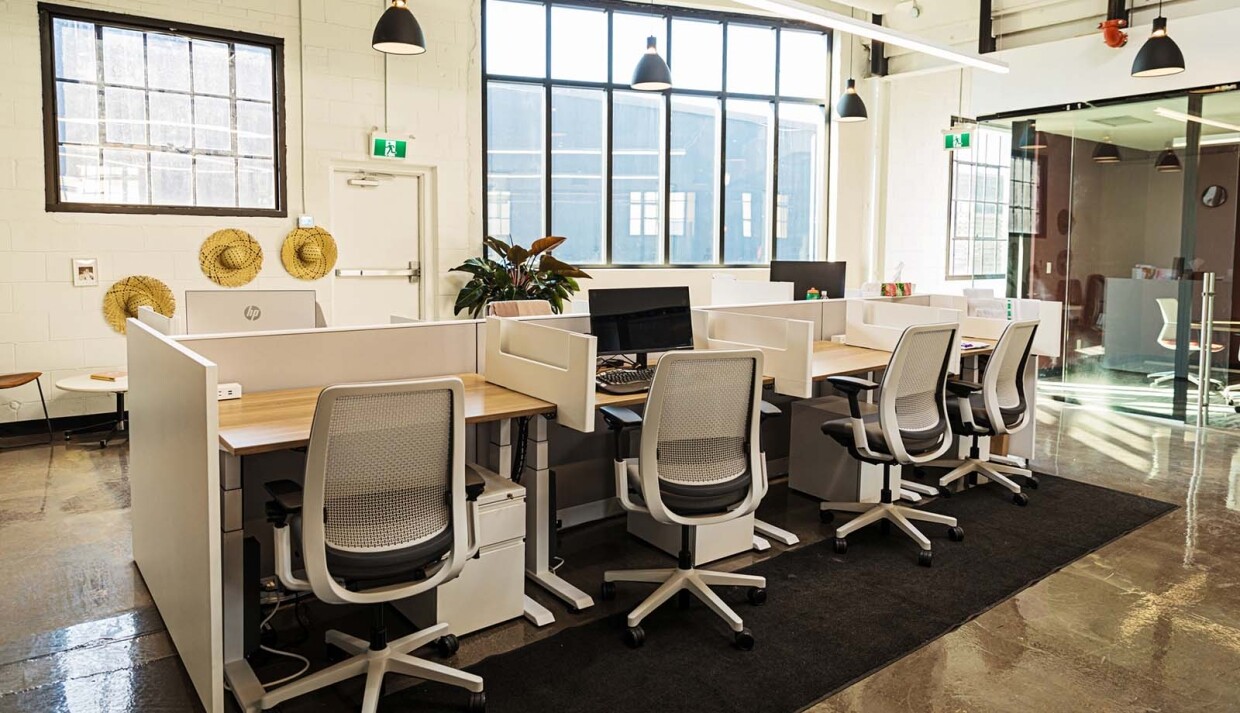
Table of contents
by Nick Mason, Director of Product and Client Marketing, OfficeSpace
According to CBRE’s 2026 Global Workplace & Occupancy Insights, 69% of organizations now have more than 40% of their population sharing desks, and no respondents still target a one-to-one seating ratio. That shift is hot desking, giving any employee an unassigned workstation they can claim for the day instead of a permanent seat.
This guide gives facilities managers and space planners a practical answer: what a hot desk is, how it compares to office hoteling software, and how the right model feeds your space management software with the utilization data it needs. Whichever model you choose, hybrid work software ties the seating strategy to the rest of your workplace operations.
Whether you are rolling out hot desks for the first time or fixing a model that does not work, you will find a usable framework here.
Companies turn to hot desking to maximize office space, improve desk efficiency, and reduce real estate costs. It gained mainstream traction during the post-pandemic shift to hybrid work and is now the default for most enterprise workplaces.
How does hot desking benefit facilities managers and space planners?
Hot desking benefits both team members and employers, and a well-run program delivers the following advantages.
- Improved space utilization: Hot desking maximizes office space by reducing the number of empty seats on the floor plan and increasing the desk sharing ratio above the traditional one-to-one. CBRE finds 48% of organizations now target a sharing ratio between 1.01 and 1.49 people per seat, up from 21% in 2024.
- Cost savings: Reducing real estate costs is the primary advantage. With hot desks, you can maximize existing office space, limit the number of assigned desks on the floor plan, and either shrink your real estate portfolio or avoid expanding before you need to. The model works well in hybrid workspaces, where attendance fluctuates significantly across the week.
- Better employee relationships: Hot desking gives team members the chance to work alongside colleagues they might not otherwise see. This can strengthen existing relationships, forge new ones, promote teamwork, and improve cross-departmental rapport.
- Improved collaboration: Hot desks improve efficiency and collaboration in the workplace. If five departments are working on the same project, a flexible work environment lets the team ramp up and down quickly without adding real estate. In-person sessions on shared desks create space to develop strong social bonds and resolve issues faster than back-to-back video calls.
- Cross-company cohesion: Hot desking allows for cross-department collaboration, which develops cohesion at the company level. When team members work next to employees they don’t normally see, they get new access to creative ideas and objective perspectives.
- Employee satisfaction: Empowerment in the workplace affects satisfaction. Hot desking gives employees a choice about where they sit, and that autonomy, paired with the flexibility of hybrid work, helps people protect their work-life balance.
- Efficiency: Employees don’t have to book hot desks weeks in advance, which makes it easier for them to walk in, plug in, and get to work.
- Hybrid work flexibility: Hot desking makes hybrid and flexible working models easier to operate. Providing unassigned flexible seating on a first-come, first-served basis gives employees the option to show up and work without the friction of locked-in schedules. JLL’s 2025 Global Occupancy Planning Benchmark Report confirms that 67% of office workers are now hybrid, in the office one to four days a week, which makes a one-to-one desk policy almost impossible to justify.
- Workplace hygiene: Hot desking encourages employees to focus on work without the distraction of a cluttered desk space. Not having a dedicated desk requires people to leave the surface clean, since they may not return to it next time. Cleanliness expectations rise, which creates more hygienic and safer workspaces overall.
How to choose the right hot desk office arrangement
You can adjust hot desking to fit different office needs. The model you pick can work if it matches how your teams use the office.
- First-come, first-served: This model lets anyone walk in and use any open desk or space available. It offers employees the flexibility to drop in as needed and prevents people from reserving desks they don’t use.
- Reserved desks: These desks let employees book a specific seat in advance. They know where they will sit, who is nearby, and what to expect. Some people reserve a desk and do not show up. OfficeSpace flags these low-utilization bookings so that facilities managers can resolve them. Our desk booking platform evaluation guide covers the rest of the enterprise checklist.
- Assigned seating: This is a useful type of hot desk for companies that don’t require cross-departmental collaboration. The model limits which desks a given employee can reserve. The downside is that employees who can book from only a small set of assigned desks may show up with nowhere to sit. OfficeSpace avoids this by showing each employee whether they are using their assigned seat.
- Office neighborhoods: These are groups of desks dedicated to specific functions or departments. Teams can place hot desks inside each neighborhood to support individual employee seating needs, such as sitting near a team or accessing specific amenities. Neighborhoods work especially well for large companies because they can hold 60 or more desks in a single zone.
- Activity-based workspaces: An activity-based workspace (ABW) is a dedicated group of seats or a zone set up to support specific types of collaboration. Each zone focuses on a particular activity, such as quiet work, private offices, group work, team-specific tasks, or focused individual work, and most activity-based workspace designs benefit from the flexibility hot desks provide.
- Agile workspaces: An agile workplace gives near-unlimited autonomy to employees. The company gives workers a task, and they choose when, where, and how to complete it. Agile working often relies directly on hot desks to deliver an extreme level of seating flexibility.
What are the common hot desking challenges?
Hot desking has real benefits, but six challenges arise in nearly every rollout:
- Employees cannot find a desk. Without real-time visibility into what’s open, employees waste the first 10 minutes of their day wandering the floor looking for a seat.
- Facilities cannot see how desks are used. Bookings, no-shows, and walk-up usage all happen, but without a system tracking each one, you have no data to match the floor plan to actual usage.
- Teams lose cohesion. If teammates cannot sit together, the in-person collaboration they came in for falls apart.
- Noise and distractions derail focused work. On an open hot-desking floor, the loudest people set the volume, and anyone trying to concentrate has nowhere to go.
- Employees have nowhere to store their belongings. Without a permanent desk, employees need somewhere to store bags, headphones, and the day’s gear. If you don’t plan for it, they will improvise.
- Employees cannot personalize a shared desk. Some people miss being able to keep photos, plants, or favorite items at their workstation, which can make the office feel impersonal over time.
To resolve each challenge, employers need to think outside the typical office setup.
- Give employees hot-desking tools that make sharing desks easier. Pick workplace software that makes hot desking quicker and more efficient for employees. A workplace mobile app and a live floor map allow employees to find an open seat, see who is in today, and book a desk in seconds.
- Manage hot desks with desk booking software. Use desk booking software that shows you how, when, and who uses each desk. This lets your management team track the success of your hot desking strategy in real time and improve the booking experience for everyone.
- Keep teams sitting together. Use neighborhoods or team zones in your desk booking software so that teammates sit near each other on the days they come in. Hold a standing weekly video meeting for remote days, and run quarterly team outings to keep new hires, long-tenured staff, and remote employees connected.
- Manage distractions with a thoughtful floor plan. Flexible seating arrangements such as neighborhoods or activity-based workspaces create a foundational floor plan that lets employees opt out of distractions when they need to. If someone needs a more focused work environment, they can use a designated quiet zone.
- Provide space for personal belongings. Employee preferences matter here. Ask your teams where they want to store their personal belongings. Lockers near entrances or along the walls can give people a safe place to store their belongings during the day.
- Provide ways to personalize shared space. Provide alternative ways to personalize shared space, such as shared bulletin boards dedicated to personalization. Encourage employees to bring items from home for the day, with the understanding that shared desks are coworking space and personal items go home with them that evening.
How to measure hot desking success through data analytics
Integrating hot desking is not a one-and-done project. Tracking desk usage and ensuring that available hot desks reflect the needs of your team take time. Watch the following metrics to spot workplace trends, make informed decisions, and keep facility planning current.
- Workplace analytics: This helps you analyze office desk utilization, facility planning, and other areas that influence organizational performance. The insights let you make smarter decisions about your workspaces. Monitoring hot desks helps workplace teams spot trends, understand seating needs, and improve the floor plan.
- Operational reports: These guide facility management and planning. Preventative and predictive maintenance reports give you visibility into facility operations to address issues before they become costly. Operational reports can inform implementation around building automation systems (BAS) such as security, HVAC, and lighting.
- Visibility reports: These reports show how people use the space. With badges and sensors, you develop a real-time understanding of layout and usage. That data turns floor plan decisions from guesses into evidence.
- Space utilization: This metric tracks how employees use space over time. Tracking space utilization helps you understand where people gather, identify wasted space, improve office design, and optimize which desks you make available.
- Occupancy rate: Tracking and improving occupancy rate are the simplest ways to create a more efficient office space. It ensures you have the right ratio of hot desks to support in-office employees. CBRE’s 2026 benchmark puts the global occupancy rate at 111%, which means companies now allocate more people to buildings than physical seats.
- Presence data: This pulls visibility reports, space utilization, and occupancy data into one view of office usage. The signals that feed it include employee badges, desk and room bookings, check-ins, cancellations, Wi-Fi logs, and sensors. Together, they build a roadmap to space optimization.
Hot desking software as part of workplace management
Hot desking is the default seating strategy for hybrid offices. From improving space utilization and driving cost savings to improving employee engagement, hot desks deliver a range of benefits for companies and team members. But the model works best when you integrate it with the right tools and existing systems.
Workplace management software covers every part of the experience, from setup to day-to-day usage and management. It gives employees the hybrid working tools they need and improves other parts of the workplace experience.
A complete workplace management platform has the following features:
- Move management tools to plan and manage one-off and large-scale moves
- Space management tools to improve utilization and eliminate redundant space
- Real-time office maps that support office wayfinding and show employees which desks and meeting rooms are available
- Desk booking and room booking software to provide a frictionless booking experience that supports any seating strategy: hot desking, hoteling, free addressing, activity-based working, or neighborhoods
- Scenario planning and stack planning functionality to visually test hypothetical floor plan changes and make fast adjustments to the company’s portfolio
How OfficeSpace Software supports hot desking
OfficeSpace Software provides everything you need to set up a successful hot desking office space. Beyond the basic features listed above, OfficeSpace provides:
- Extensive reporting: The presence data drawn from visibility reports, space utilization, and occupancy data lets OfficeSpace forecast the best space optimization for your office. Operational reports also let you preemptively address facility updates and protect office functionality.
- Technology: BAS and IoT features support better safety protocols, collect cleaner data, and create a more cohesive environment through office integration.
- Connection: A workplace mobile app that users can access anywhere, anytime is essential for employees, especially when integrated with Slack, Microsoft Office 365, Teams, or Google Calendar.
Whether you are considering hot desks for a single office in New York or San Francisco, or rolling out shared desks across a global portfolio, OfficeSpace makes hot desking and hybrid work easy for everyone.
Frequently asked questions about hot desking
Hot desking raises real questions from facilities teams, space planners, and finance alike. The answers below cover the ones this audience asks most often, from operating models to sharing ratios and rollout mechanics.
What is a hot desk?
A hot desk is an unassigned workstation that any employee can use when they come into the office. The hot desk itself is the physical seat; hot desking is the broader strategy of running a workplace on shared, bookable desks instead of permanent ones. Most modern programs pair hot desks with desk booking software so that people can claim a spot in seconds, see where teammates are sitting, and avoid the old race-for-a-seat dynamic.
How does hot desking work?
In a typical setup, employees open a desk booking app or workplace map, see which desks are available for the time they need, claim one, and check in when they arrive. Some programs run on a first-come, first-served basis, where people pick an open desk on arrival. Others use neighborhoods or activity-based zones to keep teams sitting near each other. The model only works when finding a seat takes seconds, which is why presence data and a clean booking experience matter as much as the desks themselves.
Why is it called hot desking?
The term traces back to a 1990s nautical and military concept called hot racking, where soldiers or sailors working in shifts shared the same bunk. The bunk was still warm from the previous occupant. The same logic applied to office desks, with each desk staying warm as one employee logged off and another logged on. Most workplace historians credit IBM as the first major employer to formalize hot desking in the corporate workplace.
What are the pros and cons of hot desking?
The advantages include significant cost savings on real estate, better space utilization, more cross-team collaboration, and more flexibility for hybrid employees. The disadvantages are noise and reduced privacy if zones are not planned, less personalization since people cannot leave items on a permanent desk, and potential conflict over high-demand seats. Each disadvantage can be solved with the right combination of desk booking software, dedicated quiet zones, lockers, and a clear policy.
What is the difference between hot desking and hoteling?
Hot desking is when employees sit at any available desk for the day without booking ahead, while hoteling is when employees reserve a desk in advance for a set period. Hoteling reservations are often longer-term (days, weeks, or months) and tied to specific people. Hot desking is shorter-term, more flexible, and often handled the same day. The two are sometimes used interchangeably, but they are genuinely different operating models.
What is the difference between hot desking and free addressing?
Both offer unassigned seating on a first-come, first-served basis. The difference is that free addressing uses workplace sensors that detect which desks people are sitting at, so employees check the app to see availability in real time. Hot desking instead lets employees scan the space to identify available desks themselves.
What is desk sharing ratio?
Desk sharing ratio is the number of employees assigned to share each available desk. A one-to-one ratio means every employee has their own assigned desk; a 1.3:1 ratio means roughly four employees share three desks. CBRE’s 2026 benchmark finds 48% of organizations now target a sharing ratio between 1.01 and 1.49 people per seat, up from 21% in 2024. No respondents in the CBRE study still target a one-to-one ratio, which signals how universal desk sharing has become.
Is hot desking good for mental health?
Hot desking promotes regular interaction with new colleagues, which fosters teamwork and reduces the isolation that can come with hybrid work. To protect well-being, set clear guidelines, provide quiet zones for focused work, give people technology that makes finding a seat fast, and collect feedback regularly.
What are the rules for hot desking?
Most successful hot desking policies share five core rules. Clean up daily so that the next person finds a tidy desk. Use a booking app or workplace map to find available seats without wandering. Set fair time limits in high-demand zones. Respect shared space, including noise level and personal boundaries. Provide collaboration zones balanced against quiet zones so that different work styles can coexist.
What are the alternatives to hot desking?
Alternatives to traditional first-come, first-served hot desking include hoteling (employees book unassigned seats in advance), free addressing (sensors and software track desk availability in real time), assigned seating with hot desk overflow for visitors, and traditional permanent desks. Some workplaces blend models such as neighborhood-based seating, where each team has a zone but specific desks within the zone are bookable rather than assigned.
What kinds of companies use hot desking?
Hybrid companies and organizations running flexible, collaborative, or agile workplace models, where in-office headcount fluctuates day to day, primarily use hot desking. It fits companies trying to maximize space utilization, improve desk efficiency, and reduce real estate costs. Consulting firms, technology companies, financial services, professional services, and global enterprises with high travel-heavy roles tend to lean hardest on hot desks.
How do you implement hot desking in a hybrid office?
Map current attendance patterns first so that you know how many desks you need on peak versus off-peak days. Pick a desk booking platform that integrates with the workplace tools your teams already use. Set up neighborhoods or zones so that teams can sit together when they want to. Communicate the policy before launch, and provide quiet zones and lockers from day one. After launch, track presence data weekly for the first three months and adjust seat counts, zones, and ratios based on what you see.
Make hot desking work for you
Every hot desk you activate is real estate you no longer have to lease, staff, or maintain. Hot desking is now the default seating strategy in hybrid offices, and the question is no longer whether to adopt it but how well to run it.
What makes hot desking work as more than a real estate cut:
- Real cost savings: Hot desking reduces real estate spend by cutting the number of assigned desks you have to carry.
- Stronger cross-team collaboration: Shared seating puts people from different departments next to each other more often.
- More flexibility for employees: Employees get a say in where they sit instead of a fixed, assigned spot.
- The right tools matter most: Hot desking works best when paired with desk booking software, a thoughtful floor plan, and ongoing measurement against the right utilization metrics.
- Presence data guides adjustments: Watch it closely and adjust neighborhoods, ratios, and zones as patterns shift.
Request a demo to see how OfficeSpace turns your hot desking rollout into fewer wasted seats and measurable real estate savings, whether you run one office or several across cities or countries.
Author
Based in Victoria, BC, Nick is the Director of Product & Client Marketing at OfficeSpace. He's passionate about connecting people with solutions that enable workplaces to thrive in the new world of work.
Get exclusive insights on workplace trends
utm_content
utm_source
utm_term
utm_medium
Lead ID
- By clicking here, you agree OfficeSpace Software may contact you regarding relevant products & services. You can unsubscribe at any time. Click here for our Privacy Policy.
Get more out of your space, and connect the people in it
Continue reading
Space & Real Estate
Hoteling office space: how reverse hoteling works in a hybrid office
By Nick Mason• 15mins read
Space & Real Estate
How to evaluate desk booking platforms for enterprise teams
By Rachael Roth• 6mins read
Workplace Technology
What is office hoteling software? The complete playbook for hybrid offices
By Beckett Johnson• 11mins read