
Getting Comfy with Smart Building Technology
In an interview with Lindsay Baker, President of Comfy and expert in smart building technology, she discusses her extensive career focused on improving building efficiency and sustainability through innovative technology, stemming from her academic background in Building Science and her work with organizations like the US Green Building Council and Google’s real estate sustainability team.
Getting Comfy with Smart Building Technology
By Moira vandenAkker • 12mins read • February 10, 2017

Table of contents
 In this Workplace Unplugged interview, we spoke to Lindsay Baker(opens in new tab), a technologist and pioneer in smart building technology. She shares her experience leading some of the most successful building initiatives in the country.
Lindsay is the President of Comfy, a software company based in Oakland, California. She serves on the board of the US Green Building Council in Northern California, and was a lead convener and author of the LEED green building rating systems, as well as having worked in Google’s real estate sustainability team. She did her PhD work in Building Science at UC Berkeley on human interactions with the built environment, which was where her career in smart building technology began.
LB: I’ve been in the building industry for a long time now, pretty much since I chose a career in college. I was really interested in environmental issues and found that the building industry was one of these really unique ones where there was a lot of opportunity to make buildings more efficient and more ecologically sound, while also saving people money. I thought, this is a great way to have an impact on the world in a positive way, and also do something that needs to be done. So, I studied that in school and went to the US Green Building Council after school. I worked there on the LEED rating systems, where it was just getting started at that time. It was really an incredible experience because we proceeded to take over the building industry in many ways and became one of the biggest things to impact it in the past 50 years. So, I’ve had the opportunity to see how we adopt these things in the building industry and see what that looks like. That ended up leading me to pursue a PHD at UC Berkeley in Building Science, where the focus is on thermal comfort. I got a lot of exposure there to understanding what makes people comfortable, how buildings don’t tend to do a good job of doing that, and what better solutions there are out there.
After that, I was at Google for a little bit, working in their real estate group. It was at that time that I met these two gentlemen who were computer science PHD students at UC Berkeley, they had created this prototype of what is now Comfy and they decided that they wanted to get it out into the market. I thought it was actually kind of a perfect fit for me. It’s something that I know a lot about, thermal comfort, obviously, but it’s also something that I was very passionate about doing again – trying to get something out into the industry, something that was really going to fundamentally change the way we build. So, smart buildings are something that I’ve been interested in really since we started the company. I was more of a Luddite before, to be honest, and now that we have been able to show this important role that technology can play in reconnecting people to buildings, it’s become more exciting for me to think about all of the other things that technology can do outside of just what we do with Comfy .
We asked Lindsay to tell us more about Comfy and how it impacts the day-to-day of facilities managers that use it.
LB: At Comfy our mission is to create great relationships between people and their workplaces. We really believe that you can do that by empowering people to use software that can then tune workplaces to their needs and preferences. We’ve really been a pioneer in this idea that people can be part of that loop. As buildings get more complex and digital, a lot of the building industry assumed that would mean that the occupants couldn’t possibly be involved in how the buildings are run, but we’re finding just the opposite. It means that you actually can provide the right level of control to people. We do that through a machine learning approach. Essentially Comfy is using machine learning and a connection to the building’s management system to tune every zone in the building to the needs and routines of the people in every individual space.
The number one complaint that people have with their work environment is the temperature, and that’s a problem Comfy certainly helps to alleviate for occupants. But, it also helps to reduce the amount of time that building management has to spend on this particular issue which, as you can imagine if it’s the biggest complaint people have, it can take up a lot of time. So, we do that. It eliminates this big hassle for everyone, but it also helps to optimize the building, and reduce energy as well. It turns out to be a pretty good win-win for everyone.
Just the other week Comfy launched a new offering called Comfy Insights(opens in new tab). Lindsay tells us how Comfy Insights combines people data and building data to deliver the insights needed to create an optimal workplace experience.
LB: Comfy has been out on the market for three years now and we’ve gotten more and more requests from our clients and other folks to take what we’ve been able to do with heating and cooling and expand that into a larger set of offerings. Comfy has a very high engagement rate; up to 70 or 80 percent of the occupants in the building are using it, and what that means is that we gather a lot of interesting data. It’s really useful for building managers to understand how people are using various spaces throughout the office. To that end, we just launched Comfy Insights, which helps people who manage workplaces to plan accordingly, to give employees the spaces that they need, and also understand better which spaces are uncomfortable, more comfortable, et cetera. This is really part of our bigger vision for what we do as a company, to become that better technology layer and connection between the employees and the building. The way that you do that is by helping provide actionable information to people who are managing the building so that they can better tune the building to people’s’ needs.
We asked Lindsay what she saw were the biggest challenges managers face when implementing smart building technology, such as Comfy, and what advice she has to overcome these challenges.
LB: Smart building technology, in general, what we’re seeing is that when companies decide that they want smart buildings, it’s like the first time you used a computer. You don’t get to pick your apps first, you have to first buy the computer. You’re going to spend a fair bit of time and effort just making sure that you have a computer that’s compatible with everything that you want to be doing with it. I think right now in the buildings industry we’re still at the point where many people are just doing the basic work of digitizing their building. They’re getting them able to be digitally addressable, in other words. That’s a big challenge that people have already faced. I think most of the big enterprises, the bigger landlords, have already started or finished going through that transition. The medium to smaller sized ones aren’t there yet, and I’ll just say specifically the challenges when they’re doing that tend to be related security, to who’s going to manage all of this and are they trained to do that? All that kind of stuff. And the reality is, as you can imagine if you think of what it took to get from a flip phone to a smartphone; that transition is bigger than just downloading an app on your smartphone. So, Comfy is like downloading an app on your smartphone, it’s not going to be a huge change on how you run your business, especially because it’s a subscription service, you can turn it off at any time. It’s pretty cheap compared to everything else going on. The real transition is just getting the smartphone in the first place, so in this case getting the smart buildings, getting everything technically connected.
In terms of advice for overcoming that, I think the smart thing we’ve seen people do is, certainly, getting some folks who are relatively tech savvy in the room early on. We find that these things are done more quickly and with better results from folks who are digital natives, some of the millennials in our workforce. That being said, it’s important that all departments — HR, Facilities, IT and Corporate Real Estate — come together to create systems that drive a better workplace experience. When you do that, it’s much easier to create a strong business case and execute strategic planning initiatives around smart technology .
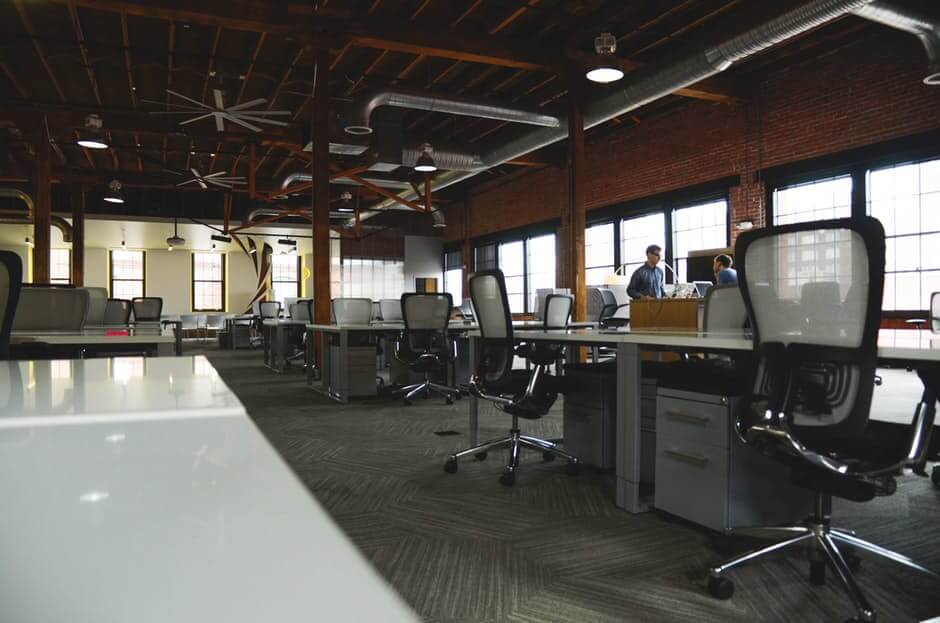
Lindsay shares some of the big trends in workplace preferences from the data collected through the Comfy app.
LB: This is some of my favorite stuff. I’m a big data nerd, especially on thermal comfort so I’ve always enjoyed spending a little bit of time understanding how our users actually use Comfy and the patterns we see. One of my favorite ones is that Monday mornings are the most popular moments to use Comfy, by far. I’d love to be able to say that that’s entirely due to the grumbling that everyone has on Monday mornings, just not wanting to be at work and needing a little bit of extra oomph to get you through the day, but I think there’s a little bit more to it than that. Buildings are also kind of taking a rest on the weekends and when they come online on Monday mornings, often they haven’t fully ramped up either. That means that sometimes you have buildings that are grumbling on Monday mornings as well as people and so that leads to slightly more uncomfortable circumstances. So, that’s a fun one that we see, and it’s one that’s informative and useful for the building industry because it reminds us that we need to do a better job with Monday Morning Ramp-up, which is an actual thing that building managers have to program and pay attention to in their buildings.
One of my other favorites is just that we see a very clear distinction between when people select “warm my space” and “cool my space”. Basically, people tend to want to be warmer in the morning and cooler in the afternoon which is really a reflection of our metabolic trends. After lunch we tend to get a little sleepy and your body has warmed up by then and so having a little bit of cooler air is nice.
I get the question about gender a lot and I usually try to answer that yes, you do see a little bit of a difference between men and women (and Comfy data sees that as well), but it’s not nearly as significant as you’d imagine. It’s a big spectrum, so there are plenty of men who run cold and plenty of women who run hot and vise versa, so we try not to pull any of them into the stereotype.
Those are some of the trends that we see with Comfy on the thermal side. But, one of the things about Comfy Insights that I’m really excited about is that it’s really more about understanding how Comfy is used very differently in every space in the building, which has a lot to do with who’s in that space. So, we’re pulling together all of that data to help people understand, for example, this conference room is used constantly and this other one is used hardly ever and we can even understand why – maybe it’s because this one is always freezing cold because the heating is broken in that room, which is oftentimes why conference rooms aren’t used! We’re interested in tying some of those trends together .
What’s next for Comfy?
LB: Comfy Insights is the biggest new thing that we’re talking about now. Our customers are just starting to use it so we’re focused on how this is going to work for them – so far, they love it! But, I will say for the app itself, for occupants, temperature is really just the beginning. It’s the biggest pain point that they have but our product roadmap includes trying to address other pain points that people have in their workplace, especially related to location services, such as finding and booking appropriate places to work in their office. It’s those kinds of things that can help us to provide a more seamless environment for people to work.

Given Lindsay’s experience in leading-edge technology in CRE, we asked her to tell us what she sees on the horizon for CRE and building technology.
LB: I think it’s safe to say that it’s still the Wild West of smart building technology in CRE right now. Buildings have been some of the last aspects of our society to really get digitized. Especially the work that we do with buildings, and that makes sense, they’re very, sort of, analog kind of things. So, it’s meant that a lot of what we do is not currently very smart. There are lots of different technologies out there that people are trying out but not a lot have come to dominate the market. I think the biggest change and challenge is that everyone is still trying to come up with the best practices, and that includes which technologies work best. I mentioned IT & security. People are still trying to figure out the right way to set up security for building networks. Also, you’re talking about a group of people who generally haven’t been technology adopters in the past. It’s a lot of folks who are not professional technologists. They’re here to run properties and manage facility infrastructure, so there is a bit of a learning curve that has to happen there. I think that’s basically what the next 5-10 years will see. To put it another way, they’re joining the 21st century right now and so we’re watching to see how that works exactly.
The last thing that I’ll say, because I think that it’s really important, is that the increasingly mobile workforce is a big challenge. It’s a fun challenge, I think, and it’s one at Comfy that we really love because it means people, fundamentally human beings, have better choices that they can make about their lifestyle. They can still work and not necessarily be sitting in a cubicle all day. But, what it does mean for those of us in the world who are providing commercial real estate? If you think about the way that the retail real estate industry has been disrupted over the past 10 years, there are a lot of folks saying that the same sort of thing is going to happen with commercial offices. We don’t have to go into work to get our work done anymore. If you look at retail real estate, many malls throughout the world have become largely empty and people are rethinking exactly what kinds of retail experiences people really want, and commercial offices very likely are on the brink of that as well. You see companies like WeWork(opens in new tab), for example, coming up to fill that void and that trend and we see ourselves very much as a part of that as well. So, ultimately we’re trying to make spaces that people would choose to be a part of and choose to work in over the coffee shop. We hope to be able to help people to continue to make those spaces as cool as they can be so people still want to come into the office.
In terms of other hot topics in CRE and building technology, Lindsay is really excited about the WELL Building Standard.
LB: One that I have worked on and pay a lot of attention to that is taking off right now is this whole thing around health. Health and wellness and how the building industry impacts that. There’s a new standard out now called the WELL standard that’s been around for a couple of years that really looks at trying to give building managers and owners a way to design in support of human health and how to run their buildings in support of human health. When two building owners who are thoughtful and want to maintain competitiveness, they’re going to ask each other, are you looking at this wellness stuff? And I love that. I think it’s a really important thing and it’s one of the things that buildings do poorly. I’m sitting in a room right now under fluorescent tubes, white walls and no view to the outdoors and these are not the inspiring places that they can be. They can be much healthier for us in terms of the air and the light and sounds and everything that they have.
To wrap things up, we asked Lindsay what she loves most about what she does.
LB: My favorite part is building the community that we have. I would say that that’s both the community within our team now, which is an amazing growing staff of 55 today, and that’s been a total delight to have a group of people come together here in downtown Oakland, which we’re very proud of, and to have the opportunity to work together on this issue. Comfy has this element of empathy and humility to it that I think really means that we have this great group of people and it’s just fun to come in and work with every day. But, it’s also the community of people who are using Comfy. It’s really cool to meet all of the users and to hear them talk about how it’s changed their feeling about their job because a lot of people get positively impacted by Comfy and get very excited about it. Knowing that we have a community of people out there who get to use this kind of thing and have started to understand that they can expect more from their work environment is really inspiring. When you take a step back and look at what buildings have been to humans over the centuries, there’s really not been that level of understanding that buildings are there to support you, that’s their job. So, to watch a group of people grow into realizing that, and to see their building in a different way is super fun. And it does really feel like a community. You feel like you’ve created this little group of evangelists who are ready to go off and talk about how we should expect more. That part is probably the most satisfying, just getting to know everyone and showing that it’s possible and having people believe you and get behind the idea.
To learn more about Comfy and get the scoop on other trends in workplace technology, check out the Comfy blog.
Is your workplace in a smart building? Share your experience in the comments below!
Photos: Jerome Dominici(opens in new tab), Pexels(opens in new tab), Startup Stock Photos(opens in new tab)

Author
Get exclusive insights on workplace trends
utm_content
utm_source
utm_term
utm_medium
Lead ID
- By clicking here, you agree OfficeSpace Software may contact you regarding relevant products & services. You can unsubscribe at any time. Click here for our Privacy Policy(opens in new tab).
Get more out of your space, and connect the people in it
Continue reading

Workplace Analytics
Planning a move next year? Here’s what to do now
By Nick Reyes• 3mins read

Workplace Analytics
Predictive analytics is transforming facilities management. Here’s how to get started.
By Yoni Rouache• 5mins read

Workplace Analytics
Advanced workplace analytics: how to use data in a hybrid office
By Allison Colburn• 12mins read
Qualified
Ellie, AI Agent
EllieAI Agent
Speak now
Hi there! I'm Ellie from OfficeSpace. Are you exploring AI-driven workplace management to optimize your office experience?
Conversation
Hi there! I'm Ellie from OfficeSpace. Are you exploring AI-driven workplace management to optimize your office experience?
Message input
Book a Meeting
Message Ellie
By continuing, you agree this conversation may be recorded and used per our Privacy Policy
Ask Ellie