
Hybrid Workforce: How To Give Employees What They Want
The article discusses the rise and permanence of the hybrid workforce, emphasizing how employers can balance employee desires for flexible work arrangements with organizational needs by leveraging technology and thoughtful planning to create ideal office environments and address challenges in managing hybrid teams.
Hybrid workforce: How to give employees what they want
By Karina Wright • 8mins read • November 25, 2021

Table of contents
- What is a hybrid employee?
- What is a hybrid workforce?
- What do hybrid workers want?
- What challenges do companies face when employing a hybrid workforce?
- Creating the ideal office for a hybrid workforce
- The future of office workers
The hybrid workforce is here to stay. Employers are looking to balance the needs and wants of individual employees, versus the needs and strategy of the organization.
Flexible working(opens in new tab) was on the rise before the pandemic. This is thanks to both demands from employees and technology that makes remote work possible. Now armed with more time for planning and better collaboration tools to support it, companies can leverage their post-pandemic hybrid workforce to everyone’s benefit.
In this article, we will further explore all sides of the hybrid workforce from the employees themselves, to how companies can best manage hybrid work and all team members going forward.
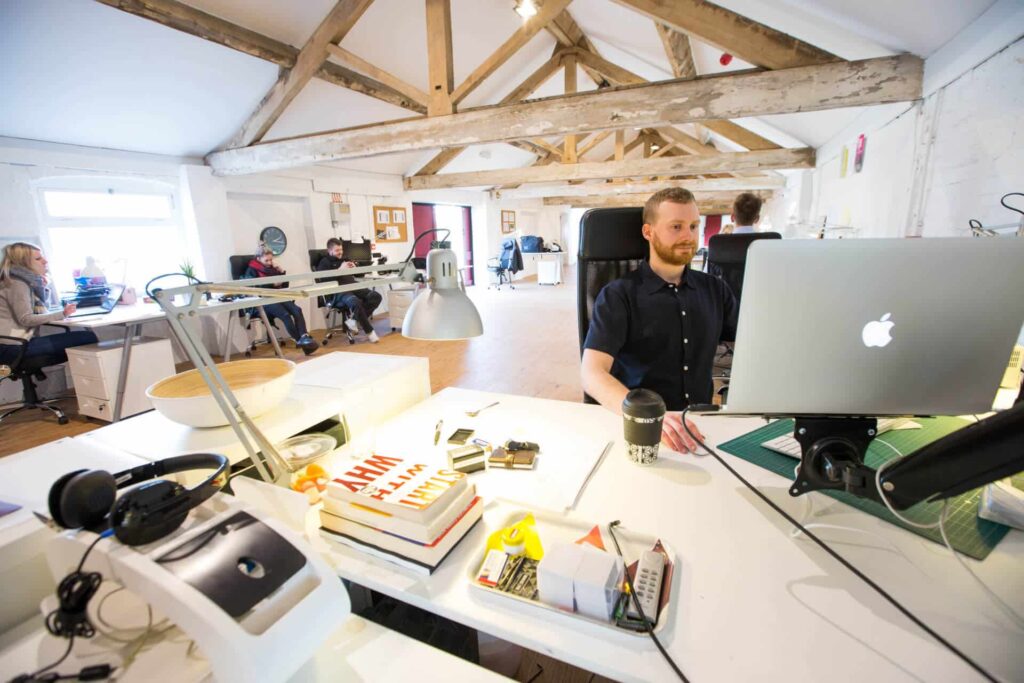
What is a hybrid employee?
A hybrid employee is one who toggles between both in-office work and remote work.
As we’ll cover further below, there are four hybrid work models(opens in new tab), and as such there are a variety of hybrid workers. Some will spend the majority of their time at the physical office. Others will work mostly from a home office and only come in for occasional meetings. However, most hybrid employees will likely find themselves with a more balanced mix between working locations.
If their company has embraced agile working(opens in new tab), hybrid workers will be completely in charge of when and where they work.
But more will likely be on a set schedule, relying on space management software(opens in new tab) and mobile apps(opens in new tab) to make room bookings(opens in new tab) and desk bookings(opens in new tab) easier.
Ultimately, the hybrid workplace and the employee experience(opens in new tab) are intimately linked, with well-managed hybrid work arrangements leading to happier employees.
What is a hybrid workforce?
A hybrid workforce is a blend of different workers—strictly in-office workers, strictly remote workers, and workers who blend the two.
In other words, the hybrid workforce is a mix of employees with different ways of working.
Most companies were forced to adopt some amount of hybrid work at the start of the pandemic. In doing so, they found that a hybrid workforce can be actually more productive and efficient than in-office workers. At the same time, it can also cut back on real estate—and therefore business costs and carbon footprint.
Specifically, studies have found that flexible working increases productivity by 4.4%, leading to increased revenue, among other benefits. This is why we can expect hybrid working to remain popular for the foreseeable future.
The return to the office is now in full swing. As a result, companies are looking at how they can use better planning, organization, and hybrid workplace technology to make hybrid working work better for everyone.
Since hybrid is now the agreed “future of work,” companies should consider the needs and goals of hybrid workers carefully. The hybrid work model presents both pros and cons, which is why companies should introduce any new initiatives carefully, ideally after consulting with their team.

What do hybrid workers want?
Both employers and employees alike must fully embrace the hybrid work environment in order for it to work. As such, business leaders should pay close attention to what all workers are demanding post-pandemic.
Hybrid workers want flexibility
We already know that all generations in the workplace(opens in new tab) crave more flexibility.
OfficeSpace also commissioned a Harris Poll survey to assess current feelings about workplace reopenings and the hybrid workforce model.
Surveyed workers were almost evenly split on whether they wanted to return to the office full time or maintain hybrid work. Results include 51% of workers not wanting to return to the office five days a week.
But perhaps more interestingly, 43% of workers said they would now consider leaving their job if they were forced to return to their physical workspace full time.
Clearly, for many workers, it’s hybrid or bust, which is critical for leaders to consider now that we’re in the ‘ Great Resignation(opens in new tab).’
All workers want safe workplaces
The survey also confirmed another key concern for all workers who use—or will use— the physical office at least some of the time.
Namely, workers are chiefly concerned about their safety and well-being. This includes 71% of workers wanting their employer to require proof of vaccination for office employees. It also includes 70% wanting mandatory mask policies.
Coupled with a new federal mandate(opens in new tab) that will require companies with 100 employees or more to test unvaccinated weekly workers weekly, it’s clear that all companies will need to prioritize health and safety.
Features like Safeguard(opens in new tab), Distancing Planner(opens in new tab), and Office Neighborhoods(opens in new tab) are features that will help companies and FMs embrace this new mandate in a simple way. Moreover, by ensuring workers are regularly checked for compliance, Safeguard can give everyone greater assurance around using the physical office. And tools that make social distancing easier keep everyone safe.
And note that these new regulations do not apply to remote workers. This may further push companies to consider using more remote teams.
More collaboration benefits everyone
Finally, our survey also found that hybrid and remote employees still crave collaboration. 75% of workers miss social time with their colleagues, and 71% miss in-person on collaboration and meetings.
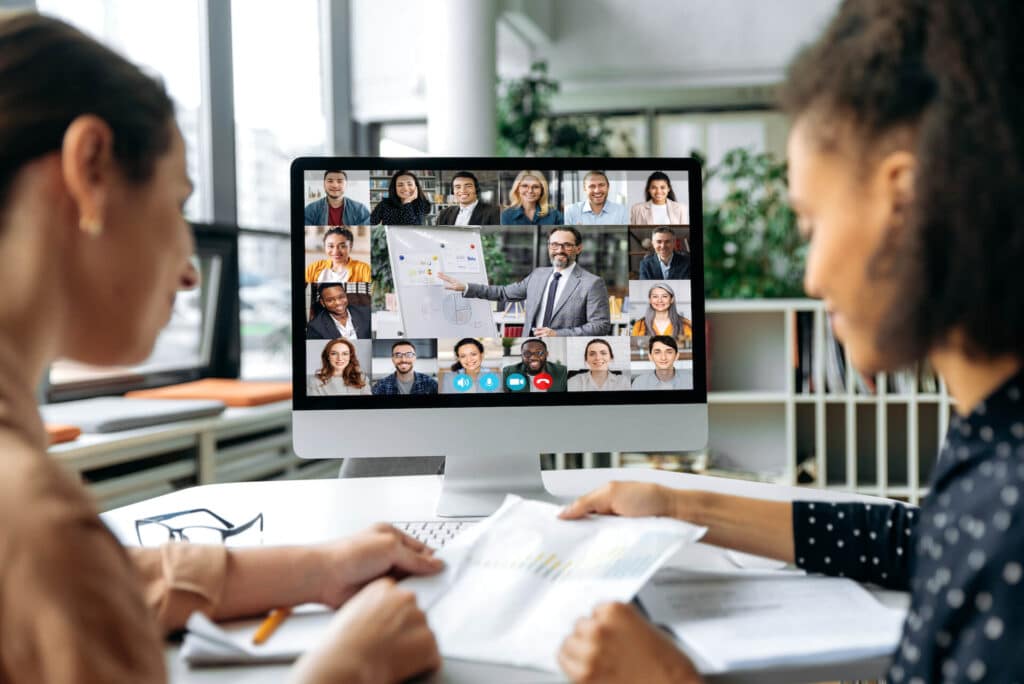
Evidently Zoom alone doesn’t quite cut it for many employees, which is part of the appeal of the new hybrid work model—assuming they have the right hybrid working tools(opens in new tab), companies can use it to give their workers the best of both worlds.
What challenges do companies face when employing a hybrid workforce?
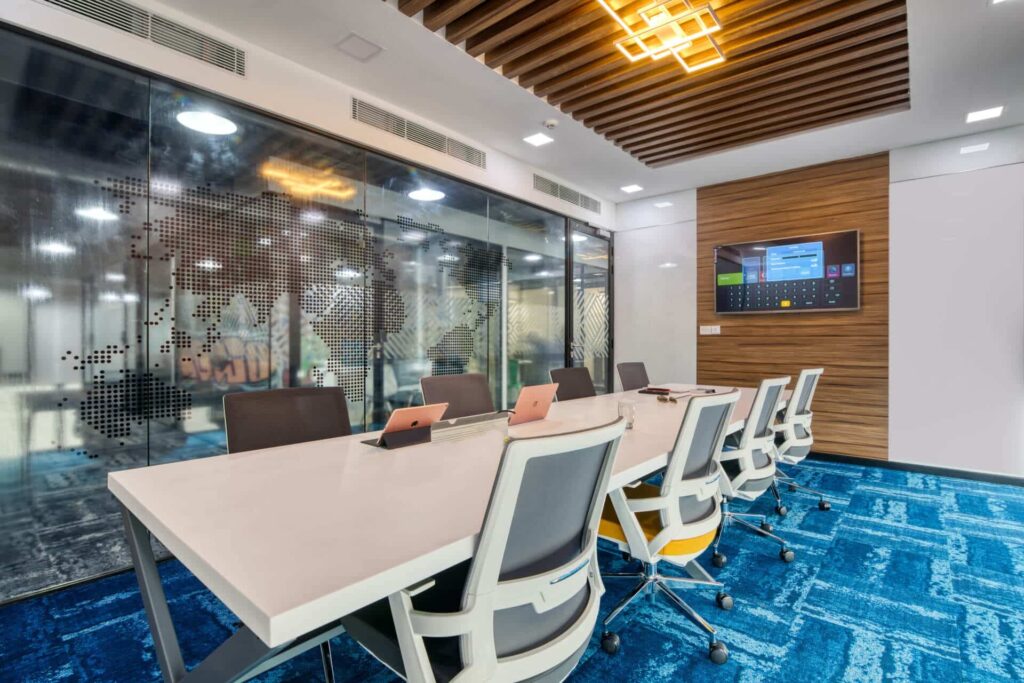
There’s no doubt: with more moving parts, a hybrid workforce is more challenging to manage than a traditional one.
Poor visibility in particular is often a hurdle to employees who are new to hybrid work. The ability to see who is in the office on any day can help hybrid workers know when they should be planning for meetings and collaborative work. With this visibility, hybrid workers can ensure they’re only coming in to work when they’ll be their most productive. Robust and easily accessible office management software can achieve this.
Similar to visibility, company culture can deteriorate in a hybrid workforce when companies don’t take extra steps to foster collaboration and employee engagement(opens in new tab).
These extra steps may include implementing work environment types(opens in new tab) like office neighborhoods(opens in new tab) and activity based working(opens in new tab), which improve collaboration. Running effective hybrid meetings(opens in new tab) that work better for your virtual team can also help.
Finally, without the right approach and the right tools, hybrid working can be an organizational nightmare.
To combat this, companies should work hand-in-hand with facility managers (FMs). Together, they can plan for and implement hybrid working properly, as we’ll cover below.
Creating the ideal office for a hybrid workforce
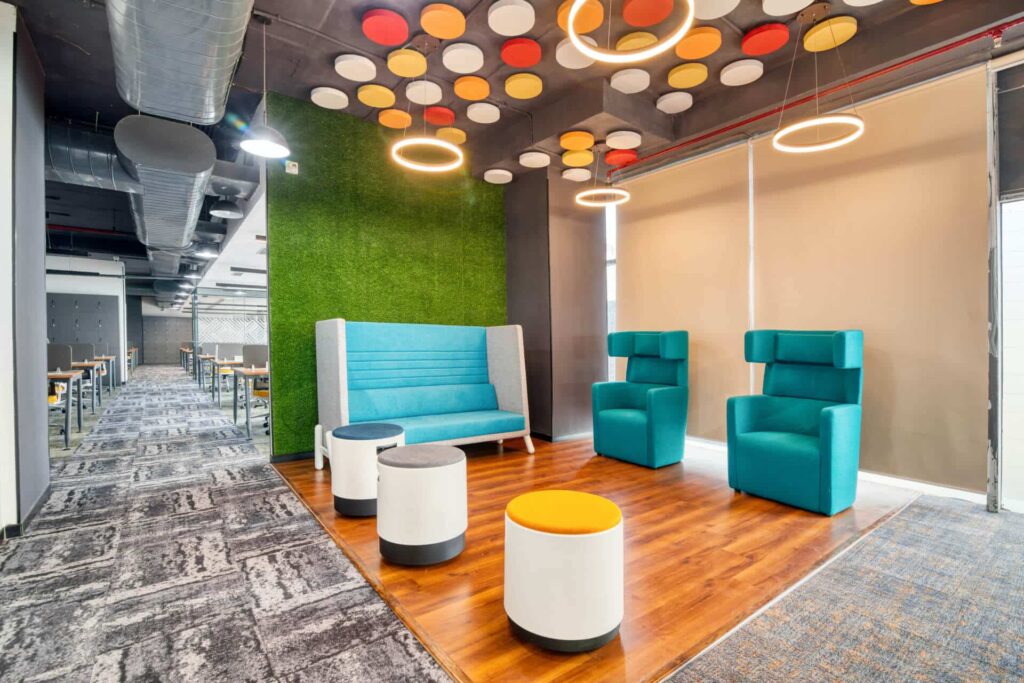
Hybrid work is a balancing act for companies. They need to balance the reality of their corporate real estate(opens in new tab) portfolio with what their employees need and want. They still need to be keeping an eye on their overall organizational goals and bottom line.
No matter what type of hybrid system they choose, all companies will share similar concerns.
First, managing cybersecurity for remote workers is challenging, making it an often hidden cost for hybrid work. For this reason, FMs should collaborate with IT(opens in new tab). This will help to ensure they have proper IT infrastructure in place for all workers, as well as a secure building automation system.
Hybrid work will also demand new policies and management practices(opens in new tab). FMs should work closely with their HR counterparts. This will help ensure that policies and communication around hybrid work are crystal clear to all involved.
And most companies need office management software that integrates with existing communication tools(opens in new tab) like Slack, Microsoft Teams, and Google Calendar.
Assuming companies have covered these basics, creating the ideal office for their hybrid workforce will largely depend on what hybrid model they adopt.
Traditionalist hybrid workforce model
Not every company is well suited to remote work, like laboratories or organizations that rely heavily on an apprenticeship model. Going forward, these companies will likely follow a traditionalist model, meaning they’ll maintain mostly in-office workers and regular 9-to-5 hours.
But don’t let the name fool you—traditionalist offices can still adopt modern policies to improve workflow and productivity.
Namely, offices employing this model may still want to consider implementing new work options that improve productivity and employee satisfaction, such as office neighborhoods, agile working, ABW, hot desking, and reverse hoteling(opens in new tab).
And since we know that 60% of office space was underutilized even before the pandemic, these types of offices may still want to use better space utilization(opens in new tab). IoT sensors(opens in new tab) in particular may help. Sensors can provide a clearer picture of their current space management and how it can be improved.
Finally, these companies may also want to consider whether they have certain positions or departments that can embrace hybrid workplace models. Even if the majority of their workforce follows the traditionalist model.
Architect and Nomad workforce models
Both architect and nomad offices are dipping their toes into hybrid work, trying to find the right balance that works for them. Architects tend to focus on reducing their real estate portfolio, while nomads focus more on employee concerns.
Both of these models are looking at how to use hybrid in the best possible way. And both can take advantage of similar tools to empower their employees.
First, workers who don’t use the office every day may struggle with locating people and resources when they come in.
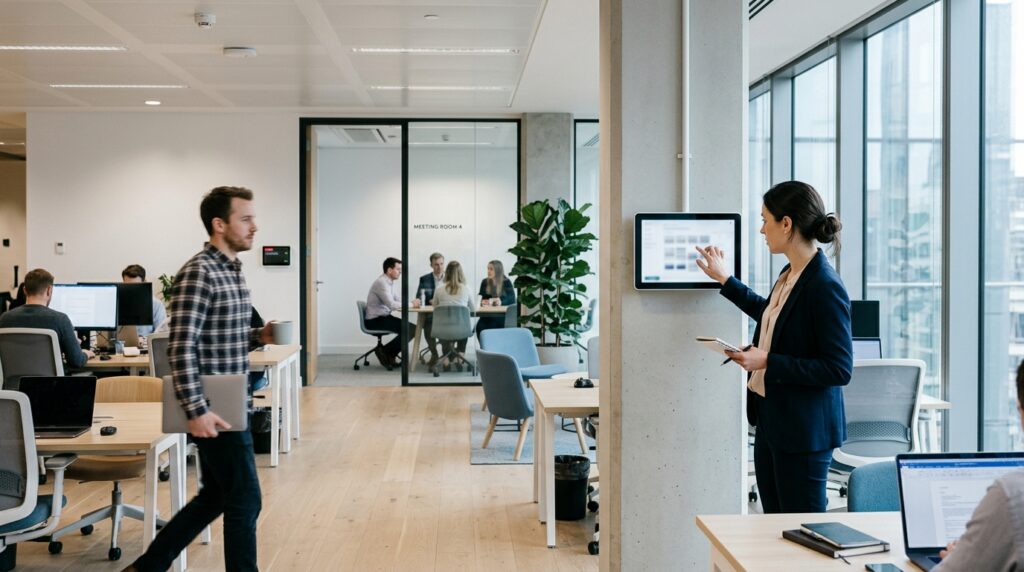
For this reason, FMs should implement good wayfinding systems(opens in new tab) with digital signage(opens in new tab). Effective wayfinding makes the office easier to navigate for everyone.
For example, Shopify now uses Visual Directory(opens in new tab) to help improve employee experience for all types of workers (and visitors).
“Visual Directory® kiosks are so essential to the way our people navigate their spaces that we constantly get requests to add more,” says Alicia Murrell, Workplace Experience Manager, at Shopify. “Our people really rely on the interactive maps inside OfficeSpace to get wherever they need to go.”
Second, it’s critical that all employees, especially hybrid ones, have access to tailored software that makes it easy to book desks and rooms, as well as to see who else has made bookings—bringing in that visibility we discussed earlier.
Ideally, this software will also provide analytic data(opens in new tab) to FMs. As a result, they can better understand how the office is actually being used day-to-day, and use that information to make more informed decisions.
Pioneer workforce model
Like the name suggests, pioneer offices are pioneers in the hybrid workforce, giving their employees greater control over when, where, and how they work. The employees themselves will get to determine just how ‘hybrid’ they’d like to be.
That means these companies will need to follow the best practices we’ve covered for both in-office and hybrid workers. Especially since they can expect to have a healthy mix of both.
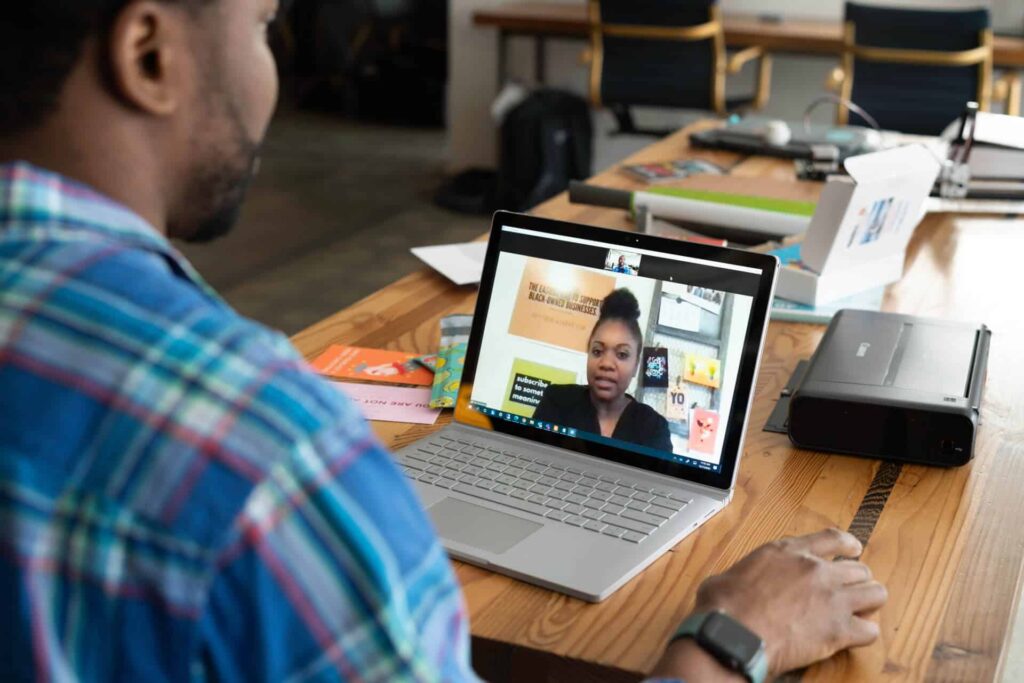
Real-time communication tools will be paramount for these workers, as well as increased cybersecurity. These workers in particular will benefit from better video conferencing. This includes Zoom meetings that integrate(opens in new tab) with their calendars and other software.
And if there’s any office that requires a robust Integrated Workplace Management System (IWMS), this is it.
The future of office workers
Employee turnover is at extreme levels. This turnover can make measures like improving work-life balance and employee experience an opportunity for companies to both attract and retain workers.
Like talent expert Bill Schaninger explains in a recent McKinsey podcast, the pandemic has created “… an unbelievable opportunity to remake culture. It’s rare in a leader’s lifetime to have such a clean drop for reshaping how you run the place.”
Ultimately, the future for office workers is one where companies take their demands seriously, and create working arrangements that allow for more flexibility and autonomy, including more hybrid work.
OfficeSpace can help offices of all shapes and sizes embrace the hybrid workforce with ease. Reach out for a free demo.
Photos: Sigmund(opens in new tab), Jonathan Farber(opens in new tab), MART PRODUCTION(opens in new tab), myHQ Workspaces(opens in new tab), myHQ Workspaces(opens in new tab), LinkedIn Sales Solutions(opens in new tab)

Author
Get exclusive insights on workplace trends
utm_content
utm_source
utm_term
utm_medium
Lead ID
- By clicking here, you agree OfficeSpace Software may contact you regarding relevant products & services. You can unsubscribe at any time. Click here for our Privacy Policy.
Get more out of your space, and connect the people in it
Continue reading

Space & Real Estate
Restacking the workplace for a workforce transformation
By Sean Wiese• 8mins read
Workplace Technology
Smart workplace solutions: 7 elements of an intelligent workspace
By Allison Colburn• 14mins read
Office Design
Principles of universal design in the workplace
By Maya Ketter• 14mins read
Qualified
Ellie, AI Agent
EllieAI Agent
Speak now
Hi, I'm Ellie with OfficeSpace. Managing hybrid workforces can be complex; how are you handling space and scheduling flexibility today?
Conversation
Hi, I'm Ellie with OfficeSpace. Managing hybrid workforces can be complex; how are you handling space and scheduling flexibility today?
Message input
Book a Meeting
Message Ellie
By continuing, you agree this conversation may be recorded and used per our Privacy Policy
Ask Ellie