
IoT for Workplaces: Boost Efficiency and Optimize Spaces
The article "IoT for Workplaces: Boost Efficiency and Optimize Spaces" by David Spence explains how Internet of Things (IoT) technology can transform office environments by enhancing request management, improving employee space accessibility, optimizing internal space usage, strengthening security and building monitoring, and promoting employee health to create more efficient and productive workplaces.
Workplace IoT: Creating an efficient workplace with IoT technology
By David Spence • 7mins read • March 21, 2019
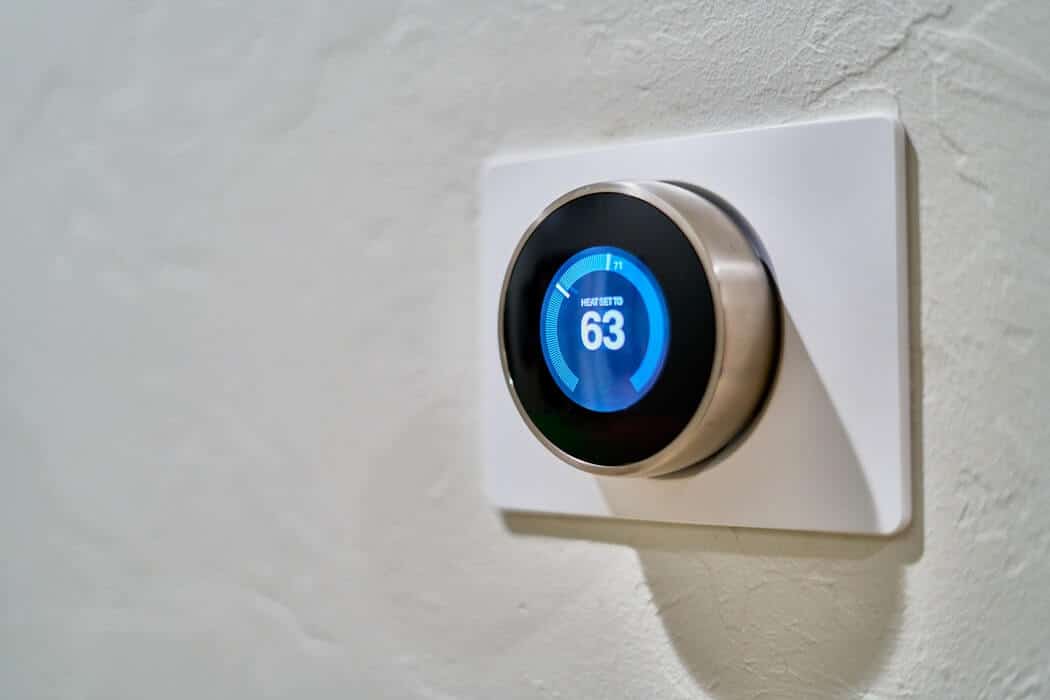
Table of contents
- What is Workplace IoT?
- Request management
- Making employee spaces more accessible
- Internal office space management
- Security and building monitoring
- Elevating employee health
- Workplace IoT can power your office
Workplace IoT… what is it? Technology has made leaps and bounds over the last few decades. So much so that it’s now able to serve us in ways that go beyond standard file-sharing and communication.
It’s become part of the fabric of everyday life by changing the way we do everyday things like grocery shop, exercise, and even how we secure our homes.
This technology, better known as the Internet of Things (IoT) has changed the way tech integrates into our lives. In fact, it’s predicted that by 2020 there will be 20.4 billion IoT devices that power our world.
What is the internet of things (IoT)? The IoT describes the network of physical objects (things) that are embedded with sensors, software, and other technologies in order to connect with or exchange data over the internet.
The question isn’t whether IoT is coming. Instead, it’s a matter of seeing how it’s going to continue to impact our lives and change the way we work and play.
In this article, we’re discussing how facilities managers can incorporate this technology into their offices and take advantage of this incredible technology.
What is Workplace IoT?
IoT is a system of devices, like home appliances, smart watches, etc., equipped with sensors, software, and other connectivity capabilities that allow them to sync and exchange data.
Some of the most well-known and widely used IoT technology has branched from household name companies like Amazon and Google.
Amazon’s Alexa makes it easy to do anything from ordering your favorite coffee blend to playing music and checking the weather, all with your voice.
Google’s Cloud IoT integrates with several types of software to optimize anything from a company’s supply chain management system to building smart cities.
Other companies are entering the market as IoT tech. Fitbit is changing the way we think about our health by tracking things like our heart rate, steps per day, and sleep cycle.
But IoT can do much more than help us keep our refrigerators stocked and cholesterol levels down. When integrated into offices, IoT can make for a more productive, efficient, better workplace for all.
Request management
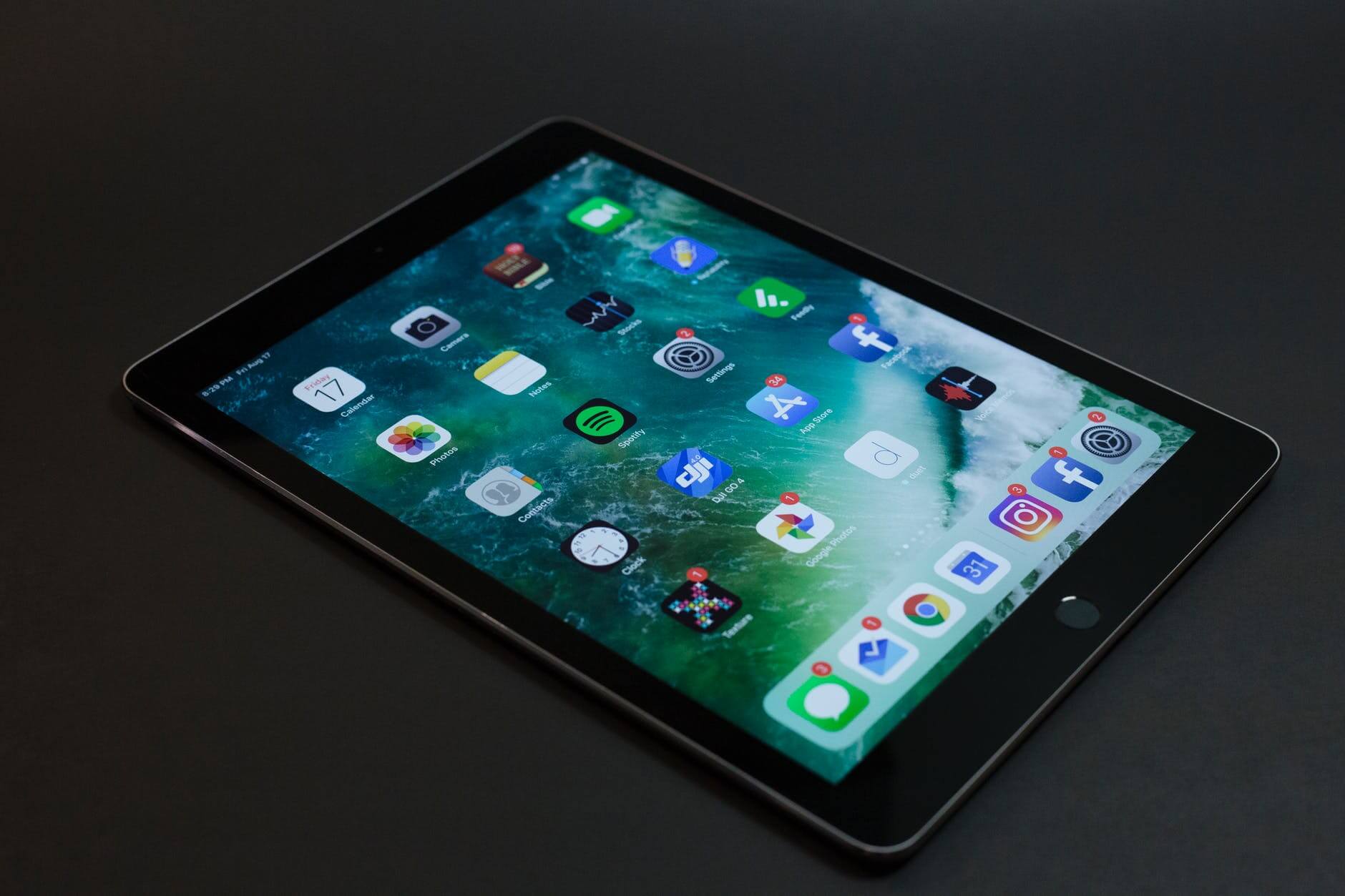
Imagine if there was a way to supervise different areas of the office without having to check those areas each day routinely. This is where IoT shines.
Facilities managers can monitor requests and other office matters with ease, which frees up time for other responsibilities. By seamlessly allowing compatible devices to sync and share data, workplace IoT can be the eyes and ears of the office and help keep things running smoothly (and help you do your job even better).
Devices like sensors and monitors can notify the right department if something needs to be restocked, fixed, or if other attention is required. This helps cut down on time associated with regularly scheduled or unnecessary maintenance and also ensures the issue is resolved promptly.
For example, instead of putting a reminder in your calendar to empty a garbage can or restock the office kitchen snack pantry, sensors in the garbage can or pantry let you know when your attention is needed—no more overflowing trash cans and no more low snack supplies. Your employees will thank you.
This software can also help oversee your office’s HVAC and plumbing systems and catch any issues before they turn into more significant problems, which not only saves you tons of time but saves you money as well.
IoT technology streamlines how departments receive and manage requests or other day-to-day matters, so nothing gets lost or forgotten. In other words, carry on with your other to-do list items and let this technology do the monitoring for you.
Making employee spaces more accessible
Along with keeping hangry employees at bay, integrated technology like this can change the way your company uses and books conference rooms and desks. Room and desk booking software not only makes it easy for employees to book resources and see what’s available, but it can help facilities managers optimize usage.
This data is essential because it can help you determine if your current space is too big for your company (or too small), which departments need the most meeting space, and can help you understand what’s being used and what’s sitting empty.
Room booking
This capability is especially important for bigger office spaces that have multiple rooms and teams meeting simultaneously. It’s essential to have a system in place to guarantee maximum efficiency.
What’s more, sensor technology can detect when a room booked for a time slot is not in use, which will then automatically free the room on the booking software so others can use it.
This automated system uses sensors to get an accurate look at room availability and keeps the calendar up to date so employees always know what’s available. No more waiting for rooms to free up or running down the hall to check if a room is being used.
Without sensors in every room, getting an accurate read on room usage rates is challenging. And with real estate being so expensive, having this data on hand can help make decisions about whether your company needs to downsize in terms of space or look elsewhere for a bigger, more affordable space.
Desk booking
IoT takes the guesswork out of unassigned seating and can provide insights that help facilities managers understand the unique traffic patterns of each desk community.
Like room booking, sensors can be added to each desk to gauge availability. This technology lets employees see what desks are available as well as if someone is sitting at a desk that currently isn’t booked in the system.
Employees who are looking for a quiet place to work or who are visiting from another company location can easily view where the open spaces are and reserve a desk. Most systems of this nature are anonymous, so you can only see if the desk is in use, not which employee is sitting there.
Desk sensors help determine if more unassigned desks need to be set aside or if you have too many desks that go unused.
Workplace IoT technology can help with other facilities management responsibilities like figuring out where new hires should sit or helping plan a move or office space reorganization. Data gathered by this software can be beneficial in more ways than one.
Internal office space management
Using an integrated software that provides a visual directory of the entire office helps gather important data so facilities managers can make decisions regarding space usage, employee count, and how best to use the space.
Locating employees, finding rooms, tracking down office equipment, and viewing seat availability is possible with IoT’s integrated capabilities. Whether you’re using a mobile device, a laptop, or a desktop, you’ll always have an up-to-date look at the current state of the office.
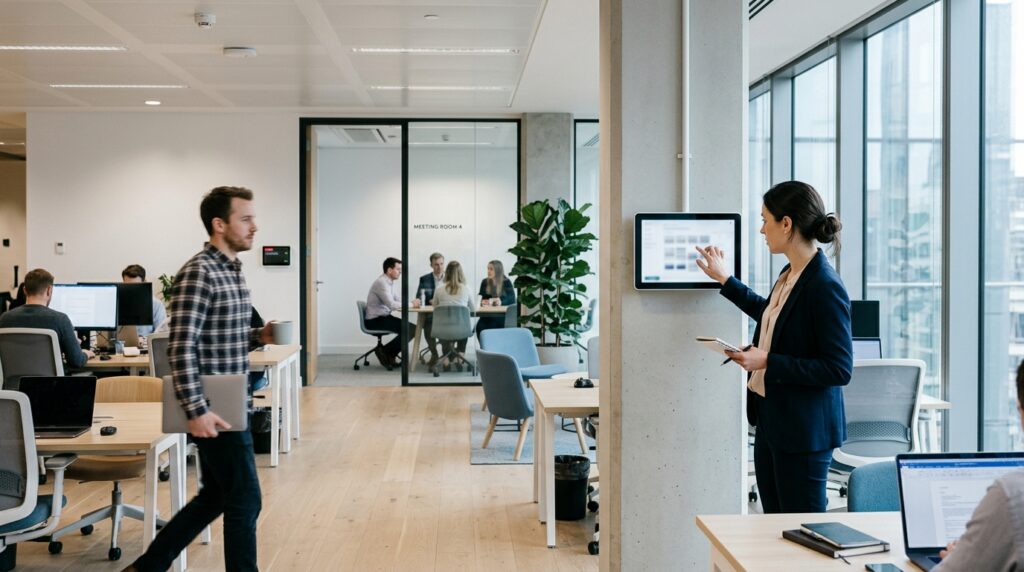
IoT takes internal office space management to the next level with integrations like an interactive map available to both employees and guests. A wayfinding kioskincludes responsive floor plans of the entire office, which makes finding what you’re looking for effortless. It’s like version control for your floor plans, only more insightful and useful.
Best of all, any updates the facilities management team makes to the floor plan in regards to where employees are sitting or the function of a room, are reflected on the map. Automatic updates are second-nature with IoT technology, which empowers facilities managers to make informed decisions and improve the workplace as a whole.
Security and building monitoring
Companies like Nest and SimpliSafe are keeping our homes protected with sensors, cameras, mobile alerts, and even panic buttons. But how can this technology keep offices safe and sound as well?
Workplace IoT tech is an excellent resource for building security and monitoring because of it’s integrated nature. From necessary security equipment like cameras and sensors to key fobs, motion-sensor lights, locks, alarms, and so much more, facilities managers can help lay the foundation for a secure workplace—both when employees are present and when they aren’t.
Having a pulse on the security of the building makes for a safer space for all employees. This technology is especially useful for large offices with multiple entrances and a high employee count.
Who said protecting against cybersecurity attacks was just on the IT team?
By protecting your building, you’re also protecting valuable company data from both unsuspecting parties and hackers.
Facilities managers can work in tandem to safeguard against these kinds of attacksusing synchronized data protection software. With the help of the IT team, facilities managers can roll out firm password/ID policies, find holes in the cybersecurity system, keep protection software, and manage who has access to certain documents.
Elevating employee health

The role of a facilities manager goes beyond that of making sure the building is functioning to the best of its ability. Creating an ideal workspace for employees is also a significant part of the job.
Aside from protecting and managing the office, IoT is an excellent tool when offering employees health and wellness resources.
Adding the following IoT technology integrations to your office can make for a better, healthier place to work:
-
Smart desks that encourage you to get up and to move after a while
-
Apps that remind you to drink water
-
Software that encourages selecting healthier food options
-
Smart watches to help you track your heart rate, steps per day, etc.
Workplace IoT can also help you optimize your office space to promote better mental health, improve air quality, and reduce noise. This technology is the perfect companion for improving company culture and creating a supportive place to work.
Employees want to work for a company that considers them to be an essential part of the team and that the company has their best interests in mind. What better way to show this than with technology to help them become better versions of themselves?
Workplace IoT can power your office
IoT isn’t something that’s on the horizon—it’s technology that is already present in many aspects of life.
However, when it comes to integrating any technology into the workplace, it’s best to choose something that’s going to give you the best return on investment. Start small and scale up accordingly. This technology is powerful and can be overwhelming at first due to all the insights and data it can provide.
With the right planning, strategy, and workplace management platform to integrate these devices to, facilities managers can create a more efficient bottom line.
If you’re thinking of implementing IoT technology in your workplace, contact our team to discuss(opens in new tab)before you get started.
Photo Credits: Dan LeFebvre(opens in new tab), Josh Sorenson(opens in new tab), Daniel Frese(opens in new tab), Buro Millennial(opens in new tab)

Author
Get exclusive insights on workplace trends
utm_content
utm_source
utm_term
utm_medium
Lead ID
- By clicking here, you agree OfficeSpace Software may contact you regarding relevant products & services. You can unsubscribe at any time. Click here for our Privacy Policy.
Get more out of your space, and connect the people in it
Continue reading

Space & Real Estate
Restacking the workplace for a workforce transformation
By Sean Wiese• 8mins read
Workplace Technology
Smart workplace solutions: 7 elements of an intelligent workspace
By Allison Colburn• 14mins read
Office Design
Principles of universal design in the workplace
By Maya Ketter• 14mins read
Qualified