
Remote, Hybrid, or Office-Based? Employers Face the Future of Work
As COVID-19 restrictions ease, employers face the complex challenge of transitioning from fully remote work to hybrid models, as many knowledge workers prefer not to return to full-time office presence, requiring thoughtful planning to redefine work in the digital age.
June 24, 2021
ZDNet: Remote, Hybrid or Office-Based?
As the COVID-19 pandemic starts to subside, it is time for employers to face yet another challenge: re-invent work for the digital age.
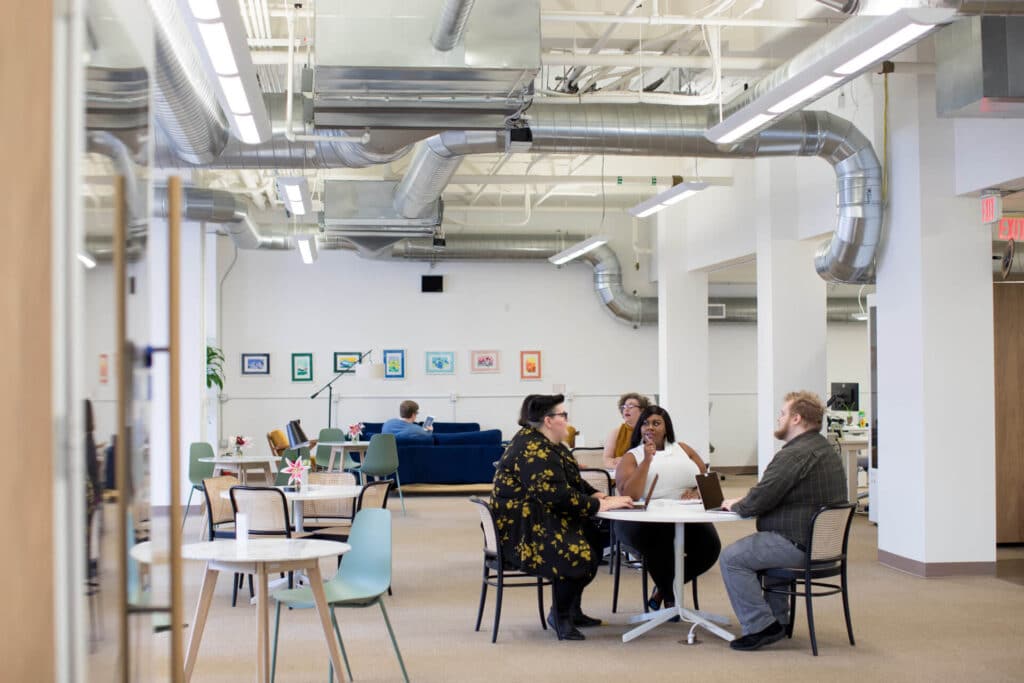
Employers are making big decisions about the future of work. This is what it might look like
See The Original Post on ZDnet
As the COVID-19 pandemic starts to subside, it is time for employers to face yet another challenge: re-invent work for the digital age.
Written by Daphne Leprince-Ringuet, Contributor June 23, 2021 at 4:54 a.m. PT
For many business leaders, the sudden transition to remote working that was forced upon companies last year as the COVID-19 pandemic shut down office spaces still brings back memories of long hours of work and a few logistical ordeals – but according to some experts from analyst Gartner, the real challenge is yet to come.
As restrictions slowly lift and employers start thinking of bringing their staff back into the workplace, some forward-thinking planning will be required to ensure a smooth transition from working fully remotely in the context of a global health crisis, to a hybrid mode of work of which the details are yet to be defined.
This is because, for a significant proportion of employees, a return to the office for five days a week is unlikely to be an appealing option. By the end of 2021, Gartner anticipates that more than half (51%) of knowledge workers – those who are involved in knowledge-intensive roles, such as writers, accountants or engineers – will be working from home at least one full day a week.
SEE: Guide to Becoming a Digital Transformation Champion(opens in new tab) (TechRepublic Premium)
And by the end of 2024, says Gartner, the change in the nature of work means that up to 60% of all employees will have the option to work remotely.
And while a large part of the workforce is now already past the novelty of logging into work from the comfort of their own home, Ranjit Atwal, research director at Gartner, explains that the next few months will be far from business as usual.
“No one thinks that the current state we are in, where people are working from home, was a natural evolution,” Atwal tells ZDNet. “It really wasn’t. It was driven by government initiatives and lockdowns, so employers haven’t had a choice. But now, they do have a choice.”
The first question that arises then is whether the workforce should be hybrid at all once the health risks from the pandemic have dissipated. There doesn’t seem to be a consensus yet: while many industry leaders are keen to keep WFH going in some form or the other, large financial institutions like Goldman Sachs and JPMorgan Chase have made it clear that they expect their staff to return onsite as soon as possible.
Atwal, for one, is convinced that remote working – or at least, hybrid working – is here to stay. The majority of workers were keen on WFH before the pandemic, he argues, and now that employees have demonstrated that they can be trusted and productive, even when they are not in the office, there is little reason for employers to hold back from new working arrangements.
But if remote work is to become the norm, as opposed to a last resort during a global crisis, employers will soon be facing some new challenges.
“Now, they have to formalize everything,” says Atwal. “This has been done to some extent up to now but things like compliance, tax, health and safety, haven’t really come to the fore. Imagine someone getting injured at home – all these things have been deliberately ignored because there are much bigger things going on, but now they need to be formalized.”
From an IT perspective, for example, employers will have to decide how much they want to invest into, essentially, sustaining both some form of office environment and a home workspace for their staff.
Gartner expects that in 2021, PC and tablet shipments will exceed 500 million units for the first time in history – a direct reflection of demand from an increasingly hybrid workforce. Money will also be poured into virtual collaboration tools, the cloud and security processes such as zero-trust network access.
Should employees buy their own broadband? Is it worth investing in 5G for staff that requires reliable connectivity at home? Will those costs be balanced out by savings on office space? Those are the questions that business leaders will be pondering in the next few months.
Perhaps even harder decisions will have to be made when it comes to using the traditional workplace. By the end of 2021, Gartner anticipates that a quarter of small and medium-sized organizations will reduce or dispense with their office footprint, in line with a hybrid workplace strategy. Instead, work spaces will be redesigned to enhance the employee experience, with a focus on teamwork.
Office space is likely to be dedicated to the things that workers can’t do at home – face-to-face formal meetings, but also informal collaboration that eventually leads to creative and new ideas.
“You need formal tasks, but there is also the serendipity part, which is where things happen naturally. People talk to each other, and something comes up – how do you encourage that?” says Atwal. “And how do you separate the two, since we are not innovating all the time, or collaborating all the time?”
“Employers will need to drive collaboration and innovation by formalizing it to some extent, but without restricting it.”
Companies need to think about how their staff work, where they work, why they might need an office and how they might be most productive in that office. In other words, this is little less than re-inventing the way work has been done until now.
SEE: Video meeting overload is real. Here’s how you can to stop the stress building up
It’s safe to say that no one company has discovered the best way forward so far, and that most employers are still testing the water.
David Cocchiara is the CEO of workplace platform OfficeSpace Software, which provides companies with a centralized application where they can plan their office floorspace, generate seating plans, let their employees book desks and room, and see how every different configuration affects their operational costs.
From extensive discussions with his customers, Cocchiara is seeing different models emerge when it comes to the future of the office, ranging from “traditionalist” – going back to pre-pandemic models, like some finance and law firms seem to be pushing for – to “pioneering”, in which employees get to decide exactly where they work and how, and office spaces are transformed into collaboration studios.
In the middle, finds Cocchiara, some firms are taking a real-estate-first approach, with a focus on reducing the cost of their office space. These employers are likely to define a hybrid model for their employees, asking them, for example, to come in only a few days a week, to ensure that work rotas fit the smaller infrastructure bill.
The last group identified by Cocchiara has a similar desire but a different approach. “They’re letting the people decide first,” Cocchiara tells ZDNet. “They want to give their employees more flexibility in how they use the work space, but they are still looking at real-estate demands and know that in a year or two, they will have some efficiencies to get out of their portfolio.”
One of Cocchiara’s customers, cybersecurity firm Rapid7, is taking this approach. The company has invited employees to come back in and is now observing how staff is behaving – how often they are using the space, for example, and for what purposes.
Using OfficeSpace’s platform, Rapid7 is able to assess which desks are booked and where, or which floorplans work the best. The idea is that, some months from now, the data will inform a final decision about the company’s flexible work strategy.
“As we go through this transformation, feedback and actionable data on what’s happening from a productivity perspective, from a satisfaction and engagement perspective, from a real-estate cost perspective – all of that will be critical when we look three to four years from now and try to figure out what the environment should look like,” says Cocchiara.
“It’s going to be interesting. And the definition of ‘hybrid’ and ‘dynamic’ will be tested and twisted as we move this forward.”
No best solution is emerging yet. Although global WFH started over a year ago, the next few years are looking to be highly experimental for many employers – and the tougher questions are only starting to get asked.
Get more out of your space, and connect the people in it
Other news
October 21, 2026
OfficeSpace Software Appoints Account-Based Marketing Category Pioneer Peter Isaacson as Chief Marketing Officer
September 17, 2026
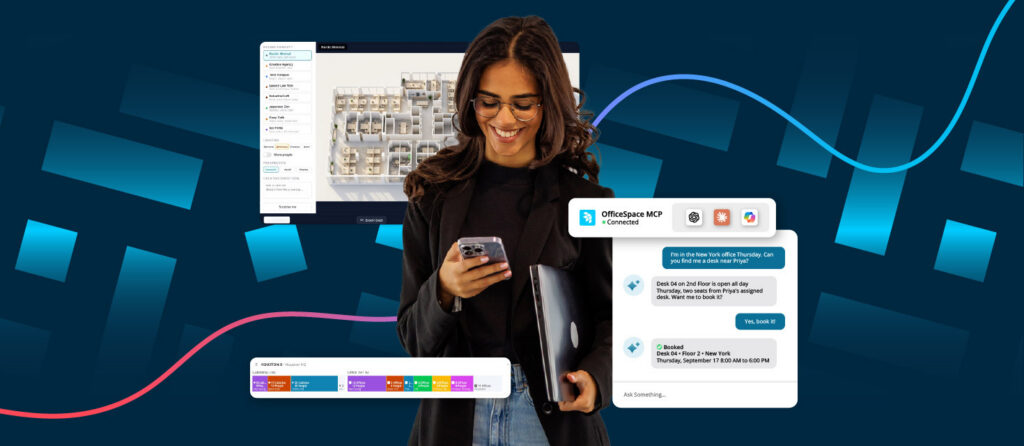
OfficeSpace Launches Studio, Advancing Its AI Operating System for the Built World
August 14, 2026
OfficeSpace Software Wins 2026 PropTech Breakthrough Award for AI Innovation in Commercial Management
Qualified
Ellie, AI Agent
EllieAI Agent
Speak now
Conversation
Message input
Book a Meeting
Message Ellie
By continuing, you agree this conversation may be recorded and used per our Privacy Policy
Ask Ellie