
The Impact of Technology in the Workplace: Employee Experience
The article discusses how technology profoundly influences the workplace by transforming communication, collaboration, and data security, while emphasizing its critical role in shaping employee experience—especially in remote and hybrid work settings—and offers insights on balancing technological advancements with employee satisfaction to enhance retention and attraction.
The impact of technology in the workplace: employee experience
By CJ Frey • 8mins read • July 28, 2022

Table of contents
- The growing impact of technology in the workplace
- Rolling out new technology in the hybrid workplace
- What are the benefits of technology in the workplace?
We see the impact of technology in the workplace everywhere—from how we communicate and collaborate, to how we store files and keep them safe.
The less obvious impact of technology; however, is also its most important. How it can improve (or degrade) employee experience (and therefore assist employee retention and attraction efforts as well).
And the more remote or hybrid work(opens in new tab) a company uses, the trickier it gets to strike the right balance between cutting-edge tech and happy employees.
In this article, we explore the impact of technology in the workplace. We also review how to ensure any impacts on workplace experience(opens in new tab) are positive ones.
The growing impact of technology in the workplace
We all know the modern workplace requires modern technology.
And we’re certainly introducing new technology at a rapid rate. On average, 75% of workers(opens in new tab) have used at least two new types of technology in the office since the pandemic pushed us all home. But the benefits of any new technology can certainly vary.
The positive effects of technological advancements are many. They include better workflows, an increase in productivity, enhancing cybersecurity, and more innovation in the workplace(opens in new tab). We’ll cover more of the benefits and impacts of technology in the workplace below.
But it’s not all sunshine and roses: there’s the potential for many negative effects of technology, too. Thankfully, many of these negative effects have more to do with implementation and policies, rather than the technology itself.
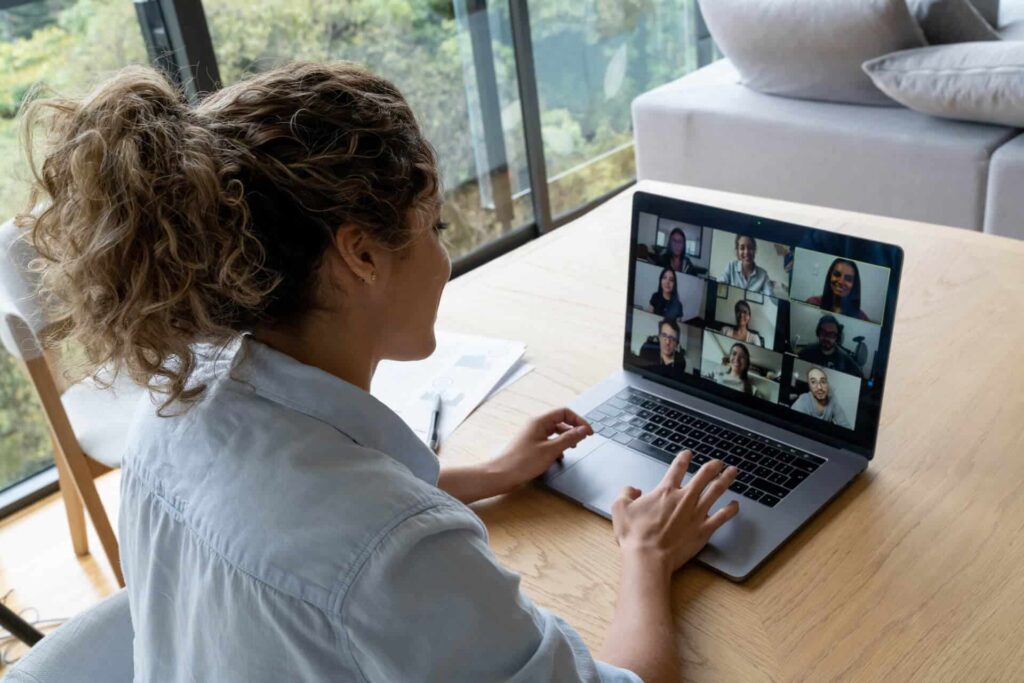
Hybrid employees(opens in new tab) now need both physical and digital workspace solutions(opens in new tab) that play nicely together and help improve the workday. But knowing how to choose and use the right technology is increasingly complex. Workplace leaders need to support a distributed workforce(opens in new tab) that is spread across multiple locations (and maybe even multiple countries).
In short, the hybrid experience(opens in new tab) demands the right mix of technology to support all workers. This dovetails with similar employee demands for more flexibility and autonomy. Workplace leaders therefore need to explore the ways technology can impact productivity and flexibility. Both for and from workers at the same time.
The impact of technology on employee experience—for better or worse
We all know that the use of technology can be a double-edged sword. First and foremost, work-life balance starts to skew when people feel the need to stay glued to their smartphones and constantly checking email after hours.
So while 94% of knowledge workers(opens in new tab) say that technology has improved their work life during the pandemic, other stats aren’t quite so rosy.
For example, other large surveys have found that one in three American workers are frustrated with their technology(opens in new tab). And 34% say their company doesn’t invest in what they need(opens in new tab) for better hybrid work.
Moreover, a massive PWC survey(opens in new tab) found that while 90% of business leaders say they’re prioritizing employee needs when introducing new technology, only 53% of staff feel the same way.
Meanwhile, we know that job satisfaction jumps from 45% to 74%(opens in new tab) when employees have complete control over when and where they work. Companies should therefore be looking for technology that has impacts on a new, more flexible work environment(opens in new tab).
When adopting new technologies, people professionals need to consider, first and foremost, the technology’s impact on the employee experience.
Louisa Baczor, CIPD(opens in new tab)
The surest-fire way to improve retention and create more empowerment in the workplace(opens in new tab) is to solicit employee feedback and use it to create bespoke flexible working strategies(opens in new tab) . And the surest-fire way to create these flexible working strategies is to invest in cutting-edge workplace technology(opens in new tab) that is carefully vetted and carefully rolled out.
This is the best way to improve both the hybrid workplace and employee experience(opens in new tab) at once.
Rolling out new technology in the hybrid workplace
Companies determine the profitability and impact of any technology in the workplace long before IT installs any fancy new hardware or software. How you introduce technology to your team can be as important to your long term success as the technology itself.
Research(opens in new tab) shows that when it comes to decisions around AI and automation—technology guaranteed to have an impact on employee experience—human resources is least likely to be involved.
Plus, recent research from CIPD(opens in new tab) shows that only 35% of employees are consulted when introducing or implementing new technologies. When not consulted, only 20% of employees report a positive impact on their job quality. This is versus 70% for those included in the process.
“Failure to engage employees at every stage of technology decisions and deployment can create more problems than it solves,” says Eagle Hill Consulting president and chief executive officer Melissa Jezior to Facility Executive(opens in new tab). “Failure to engage employees throughout the technology change process can have deep negative impacts on productivity, morale, work quality and workforce retention – all key drivers of business outcomes.”
While 92% of C-suite execs say they’re satisfied with the technology experience their company provides for making progress on their most important work, only 68% of staff agree.
So employees and other stakeholders should definitely be consulted before introducing any new technology in the workplace(opens in new tab). It’s ok to need to experiment to get things right. But it’s not ok to leave the end users out of this process—especially when workplace technology impacts them directly.
From there, decision makers should look for hybrid workplace technology(opens in new tab) that can ‘play nicely’ with any other tools they’re currently using. Having to log into a new application every few minutes isn’t helping anyone.
Specifically, companies should look to improve or introduce digital workplace solutions(opens in new tab) in the following four areas.
1. Technology to interact with the workplace
By now, we’re all aware of the benefits of the hybrid workplace(opens in new tab), as well as the challenges, too. Without the right solutions, things can get chaotic quickly. That’s why, as companies are now planning their return to the office(opens in new tab), they’ll need to ensure they’re finding solutions that create some order in a dynamic and ever-evolving space.
This can and should look like introducing (or improving) the following new tech:
- Desk booking software(opens in new tab) that allows employees to book desks in advance—whether they’re at home or in the office—so they don’t have to worry about availability or double booking; this can also dramatically improve new strategies like co-working, free addressing(opens in new tab), and hot desking(opens in new tab).
- Room booking software(opens in new tab), bringing this same functionality to booking rooms (which has the extra perk of drastically reducing the amount of ghost rooms(opens in new tab))
- A tool to bring visibility into the workplace, such as a visual directory(opens in new tab) that helps everyone instantly find and connect with the people and resources they need—even when they’re not in the same building
- Wayfinding(opens in new tab) solutions that make it easy for everyone to navigate the physical office, even when they only use it sporadically (with bonus points for meeting room digital signage(opens in new tab) and other wayfinding solutions that can bridge the divide between physical and digital workspaces(opens in new tab))
- Universally accessible centralized request management(opens in new tab)
Of course, good integrations can ensure these tools are actually impacting and helping employees the way they’re intended.
For example, desk booking and request management(opens in new tab) works best when Slack and Teams integrations(opens in new tab) build them into the apps employees are already using.
Zoom meeting calendar integration(opens in new tab) can dramatically improve meeting scheduling software(opens in new tab).
And it’s easier to get employee buy-in when tools are available on desktop as well as via smartphone. This is the case with the OfficeSpace mobile app(opens in new tab).
2. Technology to improve the workplace
Of course, it’s one thing to use your office space well. But most companies would also like to improve it (and maybe cut back on their real estate portfolio(opens in new tab) altogether).
That’s why it’s always good to use the impact of new technology to improve decision-making when it comes to workplace design and strategies.
There are two main ways to do this.
First is to use space management software(opens in new tab) that can help facility managers (FMs) and management teams understand real-time occupational metrics around how people are actually using the office. And which desks and spaces they’re using when they’re there.
Armed with workplace reports and analytics(opens in new tab), FMs will know if and when they’ll run out of space. Or how they can improve their space utilization(opens in new tab).
This benefits the long-term interests of the company, of course. Running out of space or using it improperly wastes resources.
But it also greatly benefits employees, by giving them the exact spaces and desks they need, when they need them.
Second, this process can be dramatically improved by using IoT sensors(opens in new tab) in the workplace. Sensors add invaluable and actionable data to workplace reports.
3. Technology to encourage collaboration—even remotely
Any of the benefits of working remotely(opens in new tab) can quickly erode if companies don’t invest in good technology. In particular, technology to enhance teamwork and company culture.
We like to think that in 2022, we’ve got all the challenges of remote work fixed. But only 60% of workers(opens in new tab) say they’re happy with their mobile working options.
Thankfully, due to the sheer volume of options available, companies should be able to find tools that enable more collaboration in the workplace(opens in new tab). This kind of technology impacts the workplace and helps employees by keeping them connected, wherever they are.
Specifically, most companies can benefit from a combination of the following hybrid working tools(opens in new tab):
- Messaging systems like email, social media where appropriate ( LinkedIn(opens in new tab) is often popular in the workplace), Slack, and Microsoft Teams
- An intranet or employee portals where employees can find information, access white papers and/or other resources, and receive company wide messages
- Asana, Trello, or another cloud-based option for project management
- Cloud-based word processing and spreadsheets, often through popular Google Docs and Google Sheets
- Video conferencing software such as Zoom or Google Hangouts, including the ability to integrate meetings with calendars
In short, except in certain industries, the future of work(opens in new tab) is going to be one with lots less face-to-face time. Companies should therefore take the time now to research and invest in any technologies. They must make remote collaboration more meaningful and productive.
4. Technology to improve workplace wellbeing(opens in new tab)
Finally, according to a comprehensive Salesforce study(opens in new tab), 92% of knowledge workers believe companies should use technology to improve employee wellbeing.
Moreover, 88% of employees(opens in new tab) would like tools that integrate wellbeing into their daily life. And 87% would like a library of wellness resources. Finally, 82% would like personalized wellbeing reminders.
Thankfully, there are many ways to enhance wellbeing, starting with regular surveys of employees.
Whether you’re using an old-fashioned submission box in the breakroom, or investing in cloud-based software to automate the process, companies should regularly solicit employee feedback to figure out how to use technology to improve employee engagement.
The use of surveys
“The antidote to figuring out how to reduce risk is in ensuring you’re aligned with employee sentiment and the company’s vision for supporting a hybrid work environment,’ says workplace strategist Angie Earlywine(opens in new tab), Senior Director in the Total Workplace division of Global Occupier Services at Cushman & Wakefield(opens in new tab).
After doing surveys, you’ll likely find that employees would like you to introduce training and other tools. In particular, training and tools to support their career development. That’s because 95% of workers(opens in new tab) say that tools for learning new skills are valuable. And 88% would like tools to better identify internal career paths.
Note as well that a Psychometrics employee engagement study(opens in new tab) finds that the majority of workers say they would feel a higher level of engagement with more recognition and praise. So companies may want to think about how they can build in more ‘hurrays’ into their digital communications.
Giving digital high fives can mean a lot.
Nikki Thorpe, Planday
Finally, thanks to continual new variants popping up, we can expect social distancing to be around, well into the future. Even when restrictions are lifted, employees will still appreciate space that keeps them safe and socially distant.
New technology like a social distancing planner(opens in new tab) can impact the workplace, making it much easier for facility teams to figure out how many people can be in the office at one time.
And a tool like Safeguard(opens in new tab), which offers customizable COVID-19 wellness checks available on any device, can help keep employees safe. While also reinforcing how seriously leadership treats their wellbeing.

What are the benefits of technology in the workplace?
Do a simple search online… You’ll find lots of results listing the impacts and benefits of technology in the workplace.
And it’s true. Implementing new technology well can lead to a range of benefits. Benefits like more efficiency, more productivity, more security, and reduced costs.
But the most beneficial impact of technology in the workplace is how it can improve flexibility and autonomy. The two things we know employees are demanding the most.
And if you want to know how to improve employee experience(opens in new tab) , there’s a simple solution. Ask employees what they need from you, including what new technology they want to see. And if you want them to use the physical office more, make it incredibly simple for them to do so.
OfficeSpace can help ensure the impact of technology in the workplace is a positive one that actually improves employee experience. Reach out(opens in new tab) for a free demo.
Photos: AsiaVision(opens in new tab), andresr(opens in new tab), LumiNola(opens in new tab)

Author
CJ is a CRE professional with 10+ years of experience in workplace strategy and consulting, occupancy planning, space management, and change management, with a foundation in interior design.
Get exclusive insights on workplace trends
utm_content
utm_source
utm_term
utm_medium
Lead ID
- By clicking here, you agree OfficeSpace Software may contact you regarding relevant products & services. You can unsubscribe at any time. Click here for our Privacy Policy(opens in new tab).
Get more out of your space, and connect the people in it
Continue reading

Space & Real Estate
Restacking the workplace for a workforce transformation
By Sean Wiese• 8mins read
Workplace Technology
Smart workplace solutions: 7 elements of an intelligent workspace
By Allison Colburn• 14mins read

Workplace Technology
5 practical ways to use AI at work
By Andres Avalos• 7mins read
Qualified