
There Is No One Path Back To The Office
David Cocchiara, CEO of OfficeSpace Software, explains in Forbes that as most employees resist full-time office returns, organizations must carefully navigate reopening by adopting flexible hybrid work models and best practices tailored to evolving workplace needs.
January 26, 2022
FORBES: There Is No One Path Back To The Office, But There Are Some Best Practices
But There Are Some Best Practices See The Original Post on Forbes David Cocchiara is the Chief Executive Officer of OfficeSpace Software, the creator of better workplaces.

But There Are Some Best Practices
See The Original Post on Forbes
David Cocchiara is the Chief Executive Officer of OfficeSpace Software(opens in new tab) , the creator of better workplaces.
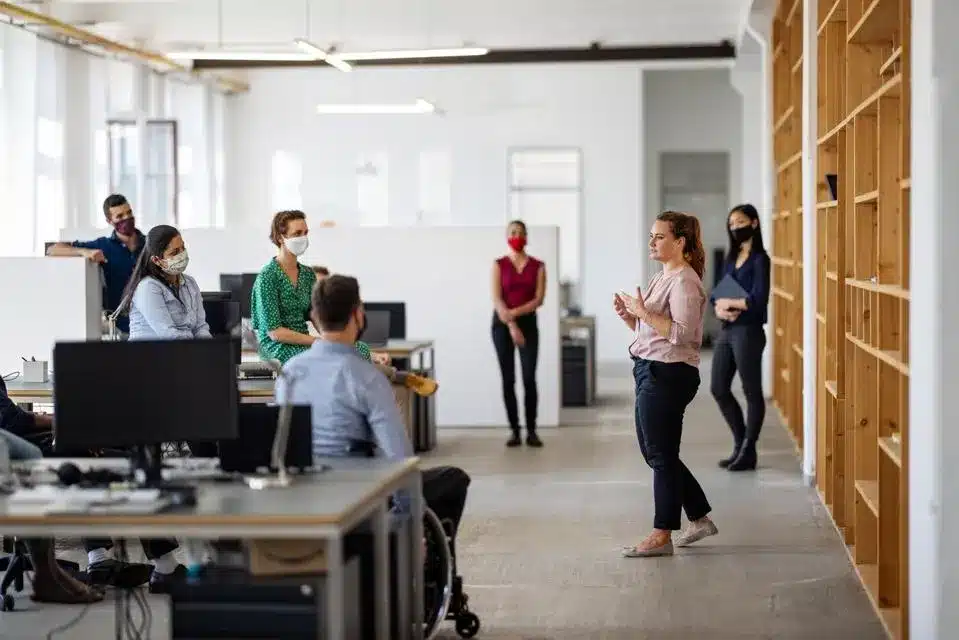
While most workers have returned to the office, a majority don’t want to return full time, and the complete return to the office remains in flux. The result means that companies and organizations must walk a fine line to reopen offices properly and return to some semblance of normal operations.
I previously highlighted the four types of organizations that will usher in the “future of hybrid work” and the questions to ask before reducing your office space. It’s been one challenge after another, from the ongoing labor market uncertainty to the new emerging Covid-19 variants.
Admittedly, planning is nearly impossible at the moment. But before companies make significant decisions that may affect the future direction of their company, they must understand the thinking of their employees.(opens in new tab)
Despite the trends present within a particular industry or region, not everyone is in the same place with their comfort levels(opens in new tab).
To understand what workers were thinking and what companies thought, my company turned to the Harris Poll. We commissioned a national survey(opens in new tab) of more than 1,000 employed Americans.
While not entirely unsurprising, the results were insightful and prove that “normalcy” is difficult to achieve and even harder to define.
Each organization must face a unique set of challenges. But our anecdotal and quantifiable data reveal that employees want a safe workplace, and they want a hybrid option that will keep them safe from whatever variants emerge next.
What Does the Survey Show?
The survey revealed that employed Americans are united in their general expectations regarding returning to the office. However, employed Americans don’t agree on the impact the Covid-19 vaccination has on returning to and being in the workplace.
Most working from an office pre-pandemic (54%) have already returned full time. Despite this finding, many workers who worked from an office pre-pandemic (51%) are not interested in going into one daily.
But they may not have the final say in the matter.
Almost half (48%) of respondents reported that their employers want their organizations to come back to the office full time. Interestingly, a similar number (41%) want some to make changes to the look and feel of the office when requiring employees to return full time.
These changes can range from scheduling when teams are in the office and limiting conference room bookings to mask and vaccination requirements. It continues to be a balance between the comfort level of employees and what a company needs to continue its success.
What Does it Mean for Organizations?
The moment is interesting and potentially challenging for organizations, and the results are clear: There is no single mandate course businesses should follow. Their choices center on bringing employees back in person or pushing for remote work.
Before they take any action, they must understand what their employees think and feel. Given the ebbs and flows of this virus, organizations must anticipate definitive plans that may remain fluid for the foreseeable future. It could be a while before the world begins to feel “normal” again.
Employers must communicate their actions and explain why regardless of the course selected. Striking the right approach may challenge some companies and their leaders and employees.
My company’s survey revealed a strong sentiment in that 71% of people working from home think employers should mandate employees show vaccination proof to return in person. Similarly, 70% say employers should give incentives to employees who are vaccinated.
Employees on both sides of the issue have strong opinions about working in person or remotely, furthering the precipitous balancing act employers must embrace.
The current challenge is that the path forward will vary considerably from one industry to another. The one constant is the necessity for safety while organizing the office and its operations to guarantee that safety as new variants emerge and disrupt the best-laid plans.
Why Do People Want to Return?
The workplace is dynamic and constantly evolving. However, one clear constant is the personal connection.
When asked what they miss about working in the workplace, many Americans working from home due to Covid-19 miss the social time with colleagues (37%). They also miss in-person collaboration and meetings (29%) and a dedicated workspace or assigned seat (29%).
But they don’t miss the work commute (55%).
What Does This Mean?
The poll revealed that most employees concur on mandated vaccination proof, employer inducements for receiving the vaccine and mandatory masking for all employees (70%). Compounding that majority is the finding that 10% of employed Americans said they do not plan to get vaccinated for Covid-19, bringing another practical conundrum to companies.
But other results, including their preferred remote versus workplace split, are a mixed bag.
What is revealing is how many (43%) would quit their jobs if their employer forced them to return to the office daily.
Companies need to consider their employees’ concerns and consider the balance between the needs of the business, what is best for the company and what is best for their employees. While it is not an easy task to be certain, it isn’t insurmountable as long as employers regularly communicate the options and are willing to adjust as the world continues to emerge from the pandemic.
While most workers have returned to the office, a majority don’t want to return full time, and the complete return to the office remains in flux. The result means companies and organizations must walk a fine line as they reopen their offices and work toward “normalcy” in the workplace.
Forbes Technology Council is an invitation-only community for world-class CIOs, CTOs and technology executives. Do I qualify?
Get more out of your space, and connect the people in it
Other news
October 21, 2026
OfficeSpace Software Appoints Account-Based Marketing Category Pioneer Peter Isaacson as Chief Marketing Officer

September 17, 2026
OfficeSpace Launches Studio, Advancing Its AI Operating System for the Built World

August 14, 2026
OfficeSpace Software Wins 2026 PropTech Breakthrough Award for AI Innovation in Commercial Management
Qualified