
Upgrading Your Building with Office Building Management Software
The article emphasizes the value of employing a facilities manager to assist in upgrading to an office building management software system, which leverages data to optimize office layouts, improve employee satisfaction, and enhance operational efficiency and profitability.
Upgrading Your Building with Office building management software
By David Spence • 3mins read • March 10, 2016

Table of contents
If your business doesn’t currently employ a facilities manager(opens in new tab), you’re missing out on a lot of insight they could bring to your company and office structure. Especially if you’re considering upgrading your building management system, an FM can help you implement a system that willimprove the happiness of your workers(opens in new tab) and even benefit your bottom-line.
Installing and implementing an office management system

If you’re not using a software suite(opens in new tab) to help you collect data about various aspects of your office, then you’re basically playing a guessing game. You might have a keen intuition about how to most effectively optimize your building and manage your workers, but combining this with hard data will only lead to improved decision-making and streamlined processes.
A facility manager can help you install an office management system that will allow you to optimize your seating assignments, office and furniture layout, and even keep track of building maintenance activities through request management. Our software(opens in new tab) will enable you to do all of the above and more.
Maximize office layout and employee seating

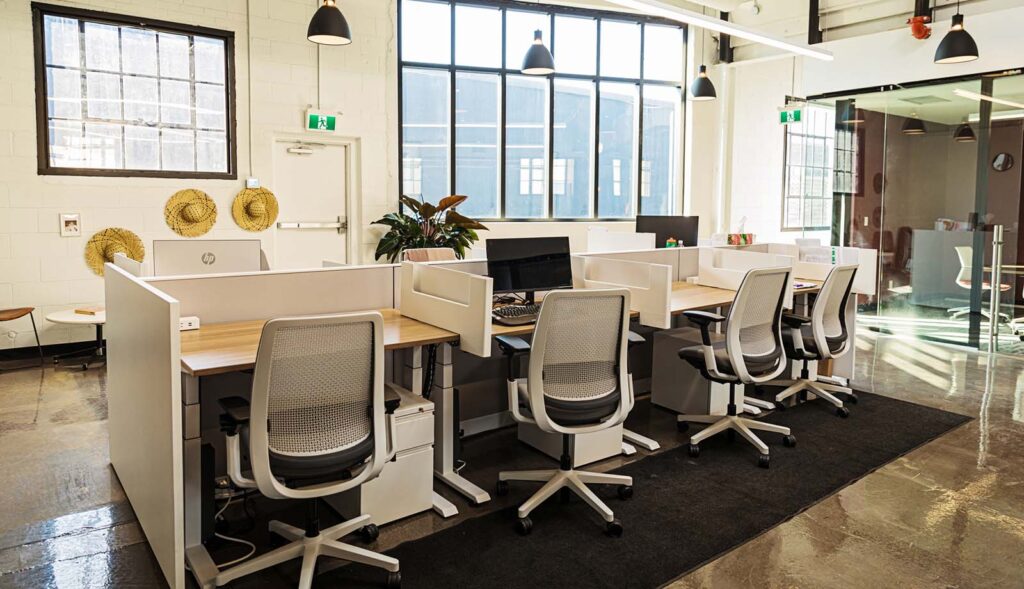
If you’re attempting to re-work the layout of your office or figure out what parts of your office aren’t being used effectively(opens in new tab)(or at all), it’s going to be difficult to do this without proper sensor information and the associated data.
Sure, you could poll your workers or walk around the office every 15 minutes to see where your employees are working. But, especially if you’re a large company, both of these methods are time-consuming and can be ineffective.
A facility manager will install tracing sensors throughout the office, which can help you see which spaces of the office are actually being used and for what purpose. This information can enable you to make better office layout decisions. For example, you might assume the back corner office isn’t being used, so you convert the space into a relaxation room. Yet, you come to find out that the space was actually being used for high-level company meetings. A costly mistake like this could be avoided by installing simple sensor trackers.
Improve your bottom-line through energy savings

When your building’s energy system is streamlined and efficient, you’ll end up saving your company money.
Optimize your office(opens in new tab) through energy savings measures and energy tracking. For instance, an FM can implement building management software that will inform you of when you need to do required maintenance on building-wide systems and general appliances.
You can also track energy usage and install motion sensor lighting and power for areas of the office that are used infrequently. Even small energy decisions can add up to large-scale savings over the years, including an increase in employee productivity.
Improve scheduling and ordering processes

Do you have a system for managing requests? If not, it’s easy for things like support requests and shipping orders to slip through the cracks.
A facility manager can implement a request management system(opens in new tab) that will enable you to easily file and process every request that comes across your desk. This process can be streamlined even further with facility management software(opens in new tab).
By building a set of processes for handling shipping, ordering, and maintenance requests, you can ensure that you never end up being the company bottleneck. The quicker you can pass off the request to a relevant party, the more efficient your company will be.
When you’re upgrading your building management system, it’s always helpful to enlist the advice of a professional. By working with a facility manager, you can ensure your workplace is always running at peak efficiency and that your employees are excited to come to the office every day.
Photos: Cathryn Lavery(opens in new tab), Paula Borowska(opens in new tab), Chelsea Francis(opens in new tab), Leeroy(opens in new tab), Jeffrey Betts(opens in new tab)

Author
Get exclusive insights on workplace trends
utm_content
utm_source
utm_term
utm_medium
Lead ID
- By clicking here, you agree OfficeSpace Software may contact you regarding relevant products & services. You can unsubscribe at any time. Click here for our Privacy Policy.
Get more out of your space, and connect the people in it
Continue reading

Space & Real Estate
How much office space per person do you need for your workplace?
By CJ Frey• 12mins read
Hot Desking & Desk Booking
What is a hot desk? Everything facilities managers need to know in 2026
By Nick Mason• 11mins read

Space & Real Estate
Hoteling office space: how reverse hoteling works in a hybrid office
By Nick Mason• 15mins read
Qualified